
Last updated November 24, 2026
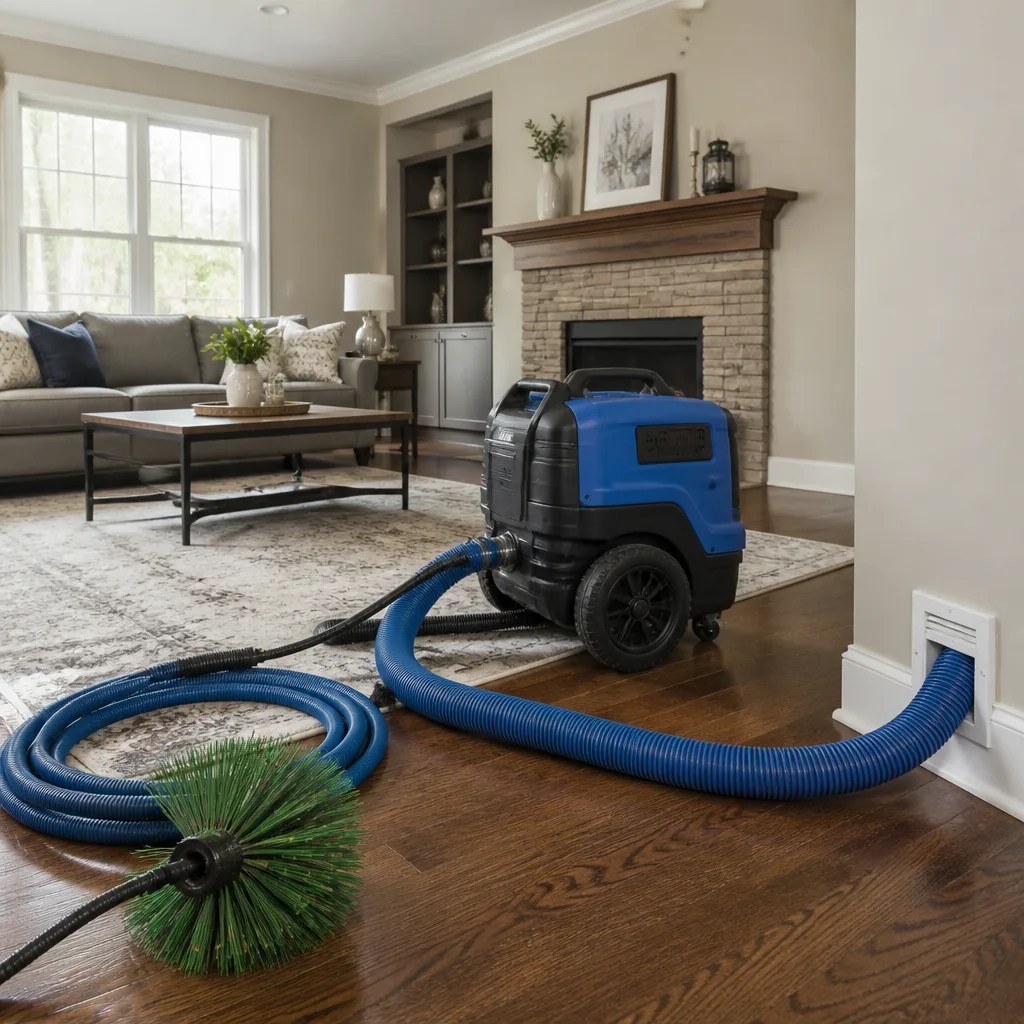 Whole-home duct cleaning
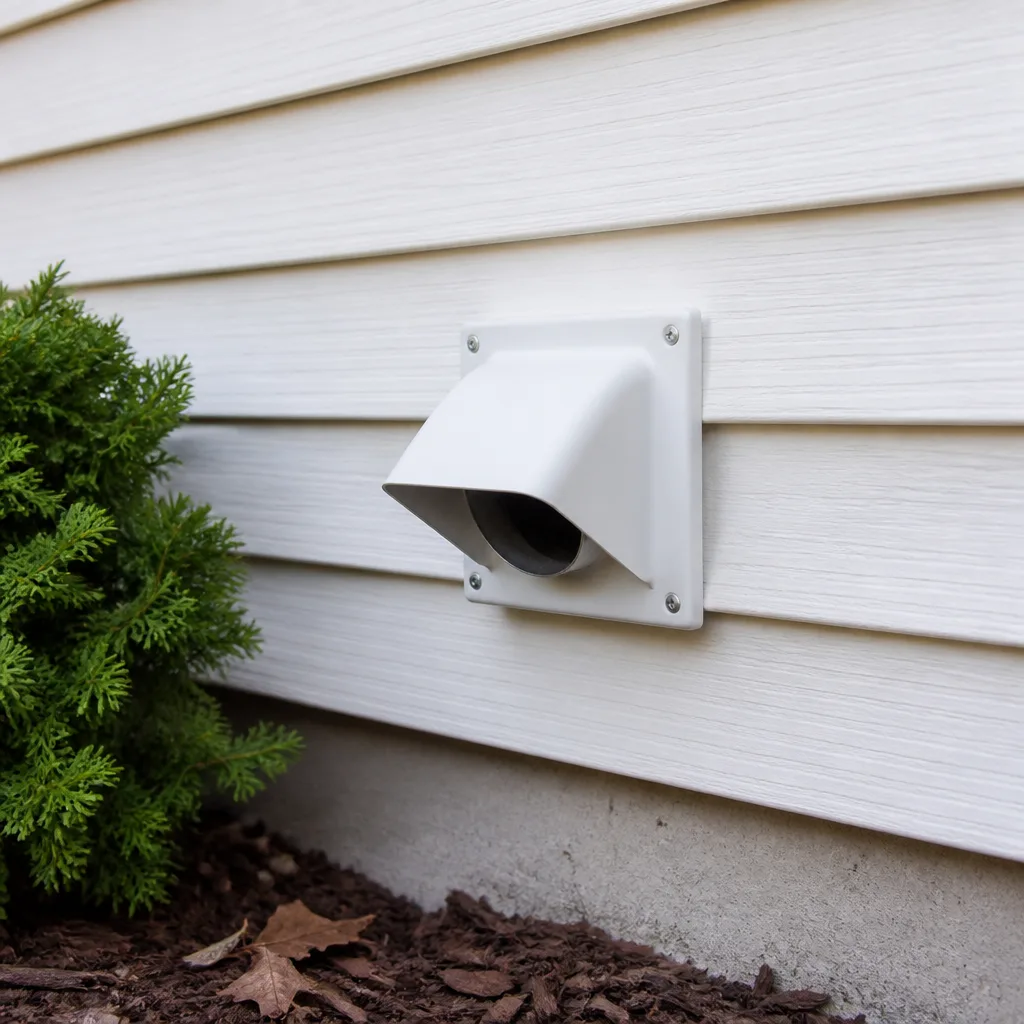 Dryer vent cleaning
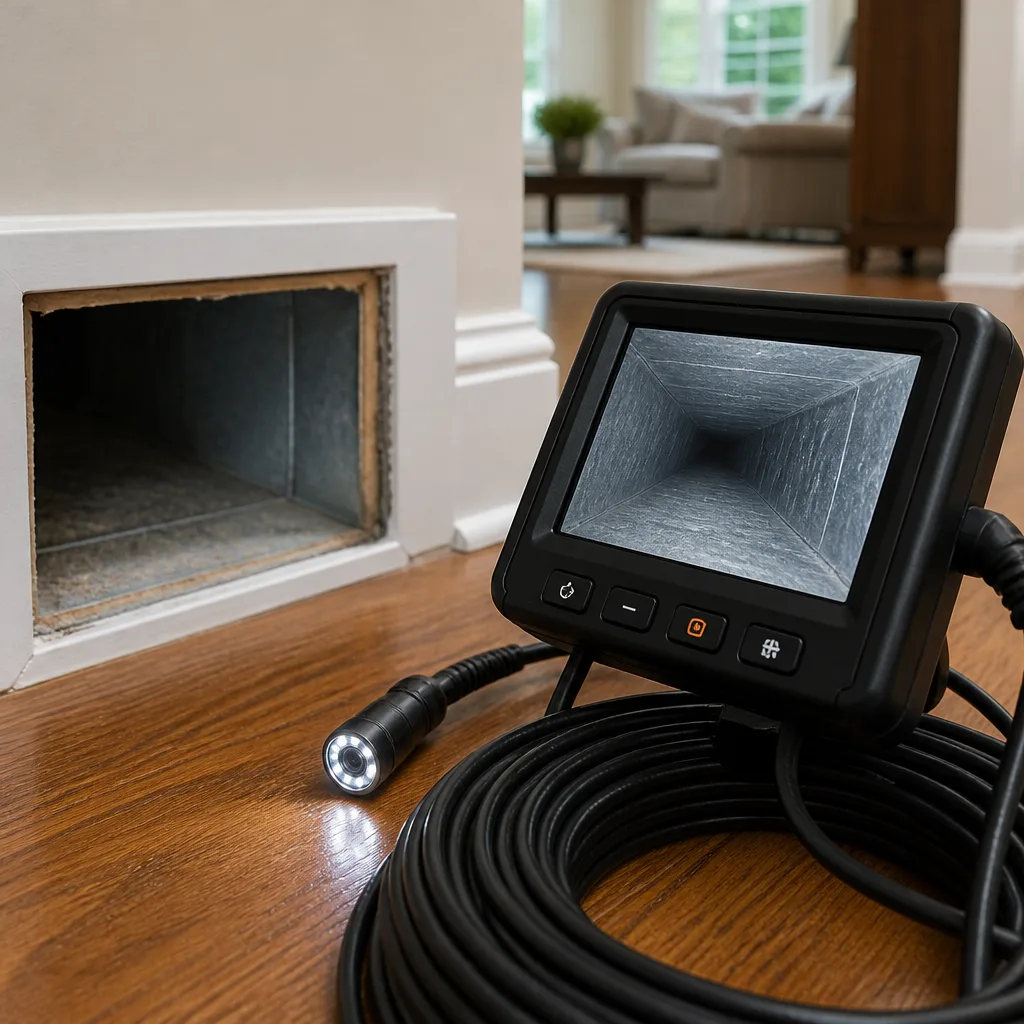 Camera inspection
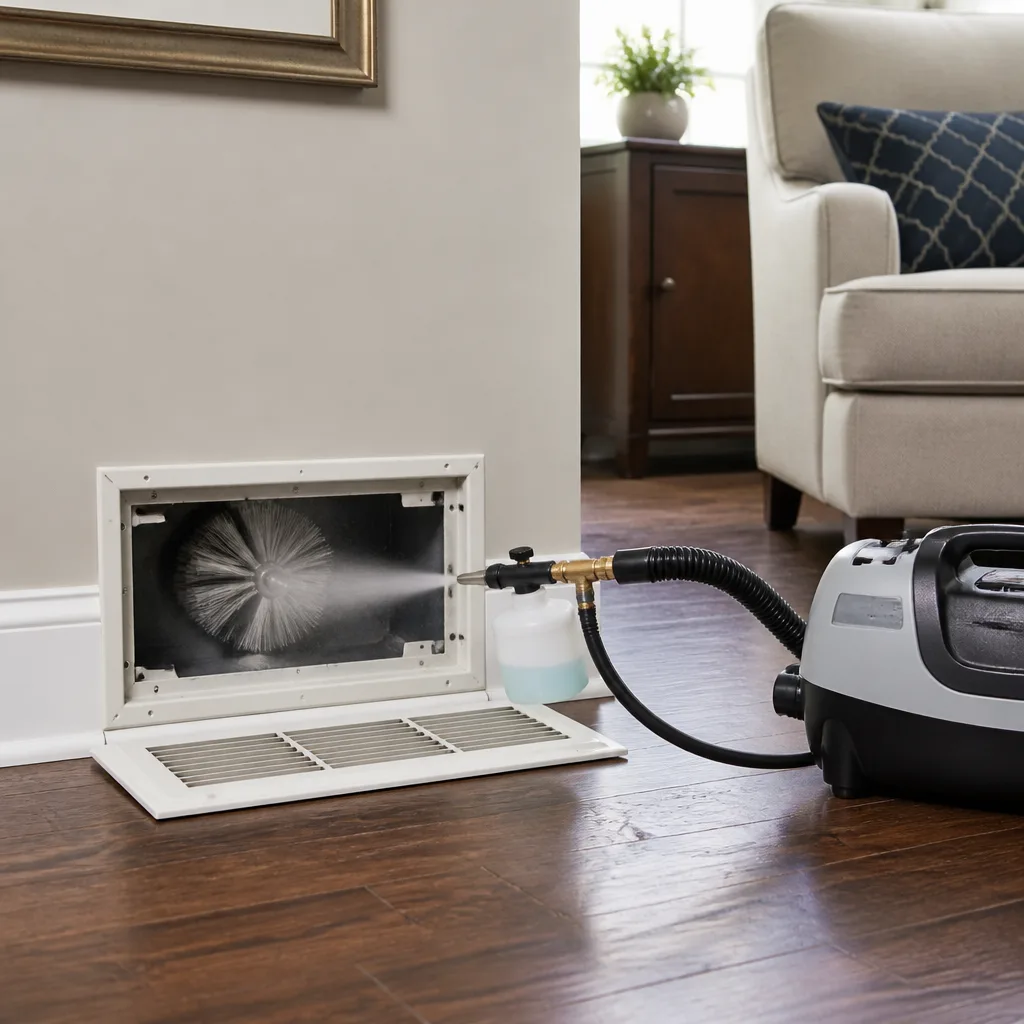 Sanitizing & deodorizing
Whole-system duct and dryer vent check with before-and-after photos - you see exactly what came out of your vents
That "$99 whole-house special" is a bait ad - the real number appears once they are in your hallway, or the "clean" is a shop-vac at the register. We photograph the inside of your ducts before and after instead.
How to Hire an Air Duct Cleaning Contractor in West Anaheim: A Step-by-Step Guide
The most common duct cleaning problem in Southern California isn’t a fake company. It’s a real one that shows up with a shop vac, charges a couple hundred dollars, and leaves your ducts exactly as dirty as it found them. The invoice is paid, the truck leaves, and nothing about your air changed. That’s not a scam in the legal sense. It’s a cheap job sold as a real one, and it works because most homeowners have no idea what equipment a proper cleaning actually requires. This guide gives you what the sales call never does: the equipment benchmarks, the licensing checks, and the written scope questions that separate a genuine whole-system cleaning from a vacuum dragged through your registers. We’ll walk through everything you need before booking anyone in West Anaheim.
Quick Answer
Hiring an air duct cleaning contractor in West Anaheim means verifying three things before anyone enters your home: that they use professional-grade mechanical agitation and negative air extraction (not a portable shop vac), that their liability insurance and contractor license are current and verifiable, and that the quote is priced per whole system rather than per vent. Ask for those three things, get them in writing, and you’ve screened out most of the low-bid operators that dominate this market.
Styles & brands we work with
- Whole-home duct cleaning
- Dryer vent cleaning
- Camera inspection
- Sanitizing & deodorizing
Table of Contents
- What equipment should a duct cleaning contractor actually use?
- How do you compare duct cleaning quotes when the line items are vague?
- What are the red flags in the booking process?
- What licensing and insurance does a contractor in Orange County need?
- How should you structure the job scope in writing?
- What does follow-up verification look like?
- Why does West Anaheim’s climate affect how often ducts need cleaning?
- Common Mistakes to Avoid
What equipment should a duct cleaning contractor actually use?
A real duct cleaning requires two things working together: mechanical agitation to break debris loose from the duct walls, and high-powered extraction under negative pressure to pull that debris out of the system entirely. Anything less is surface work. A contractor who arrives with a portable vacuum and a hose nozzle is doing exactly that – surface work – regardless of what the invoice calls it.
Here’s what to actually ask about on the phone, before you book:
- Mechanical agitation: Does the equipment include a rotary brush or compressed-air whip that physically scrubs the duct interior? A vacuum alone can’t dislodge caked dust, pet hair, or construction debris stuck to the walls.
- Negative air pressure: Is the extraction unit creating negative pressure throughout the system while they work? This is the difference between contaminants being removed and contaminants being redistributed into your living space.
- Filtration: Does the equipment include contaminant-grade filtration – the kind used in remediation work? This matters if anyone in the house has allergies or asthma.
- CFM rating: Ask how much airflow the extraction machine moves. Professional units are rated in cubic feet per minute, and the number tells you whether it can actually pull debris from the far end of a long run.
We use Rotobrush rotary brush systems for mechanical agitation, paired with Nikro negative-air extraction and Abatement Technologies contaminant-control filtration on every job. That’s equipment you’d expect in a commercial setting, used in your home. When you’re calling contractors in West Anaheim, ask each one what specific machines they run. A contractor who can’t name their equipment or hesitates on the question is telling you something.
What does NADCA membership actually verify?
NADCA is the National Air Duct Cleaners Association, and membership signals that a company has agreed to a published standard of care. What it does not verify is the equipment on the truck, the quality of any individual job, or the training of the technician in your hallway. Treat membership as a baseline check, not proof of a good job. The equipment questions above tell you more about the work you’ll actually get.
How do you compare duct cleaning quotes when the line items are vague?
Per-vent pricing is the single biggest reason duct cleaning quotes are impossible to compare. One contractor quotes $49 per vent. Another quotes a flat $450 for the whole system. Those numbers describe completely different jobs, and the per-vent price almost always balloons once the technician counts your vents and adds fees for “heavy soil,” “additional runs,” or “sanitizing.”
The honest structure is whole-system pricing. A duct cleaning quote should tell you the total price for cleaning the entire connected air pathway – supply and return – before anyone touches a register. That price should be fixed by a written estimate, not adjusted on-site.
When you’re comparing quotes across West Anaheim contractors, put them side by side and check:
- Is it per vent or per system? Per-vent pricing hides the real total until the technician is in your hallway.
- What’s included? Supply and return? Main trunk lines? Registers and grilles? Blower compartment?
- Is sanitizing included or extra? Post-clean sanitizing should be a scheduled step, not a surprise add-on.
- Is there a trip charge or “inspection fee”? Reputable contractors give a free estimate and price the job from there.
- Does the quote mention the equipment? A professional quote names what will be used; a vague one doesn’t.
If two quotes differ by a wide margin, the cheaper one is almost always a smaller scope dressed up in the same words. Ask both contractors to describe, in writing, exactly what the technician will do from arrival to departure.
What are the red flags in the booking process?
The booking call is where most bad jobs reveal themselves, if you know what to listen for. A contractor with real equipment and a real process doesn’t need to pressure you on the phone. Here’s what should make you pause:
- Unusually low pricing combined with same-day availability. A price well below what the equipment and labor actually cost, offered immediately on a call, means the job is being sold on volume and something has to give. The equipment, the scope, or both.
- No pre-service walkthrough. A legitimate contractor inspects the system before quoting – counting vents, checking the air handler, noting any obvious damage or disconnected runs. A contractor who quotes sight-unseen and then adjusts on-site has set up a bait-and-switch.
- Refusal to show equipment. If you ask what machines they use and the answer is “we have everything we need” or “don’t worry about it,” that’s a refusal. Walk away.
- No written estimate. A quote delivered verbally and never put in writing can’t be held to anything.
- Pressure to add sanitizing or “sealing” before the cleaning is even done. Upsells aren’t inherently bad, but the order matters. Cleaning comes first, sanitizing after, and none of it should be decided before the duct interior has been inspected.
- No willingness to put license and insurance information in writing. Covered below, but it’s a red flag on its own.
- Technicians who won’t let you watch. We’re happy to walk a homeowner through the job as it happens. A contractor who wants you in another room for two hours is worth questioning.
What licensing and insurance does a contractor in Orange County need?
In California, anyone performing construction work – including duct repair and sealing, which falls under HVAC – needs a contractor license from the Contractors State License Board (CSLB). Duct cleaning alone sits in a gray zone, but any contractor doing repair, sealing, or HVAC work should hold a valid CSLB license. Liability insurance is separate and just as important: if a technician damages your air handler or ductwork, you want a policy behind the company, not a handshake.
Verification takes about a minute:
- Ask the contractor for their CSLB license number. They should give it without hesitation.
- Go to the CSLB website and search the number. You’ll see license status, classification, and any disciplinary history.
- Ask for a certificate of insurance showing general liability coverage, and confirm the policy is active by calling the insurer’s number on the certificate.
If a contractor can’t produce both, don’t invite them into your home. That’s true for any trade, and duct cleaning is no exception. For the local pro we connect you with, licensing and insurance are current as their state requires. Get the same proof from anyone else.
How should you structure the job scope in writing?
A duct cleaning estimate is only as good as its scope. The number on the page means nothing without a written description of what’s included, what’s excluded, and how the contractor will verify the work afterward. Get all three before the technician arrives.
What should be explicitly included
- Cleaning of all supply and return ducts connected to the air handler
- Cleaning of the main trunk lines and individual branch runs
- Cleaning behind the registers and grilles
- Blower compartment and accessible parts of the air handler
- Negative-air extraction during the work, with filtration on the exhaust
- Mechanical agitation of every duct run – not just the accessible ends
- Post-clean sanitizing as a scheduled step
- Before-and-after photos of your system
What should be explicitly excluded
- Duct repair and sealing (separate scope, separate quote – this is the work that fixes leaks and disconnected runs, not cleaning)
- Dryer vent cleaning (a separate service, and one worth doing on its own schedule)
- HVAC component replacement or major repair
- Filtration upgrades and filter changes
Exclusions matter because the biggest disputes after a duct cleaning come from a homeowner expecting something the contract never promised. “Clean the ducts” means different things to different contractors, and a written scope removes the ambiguity.
What does follow-up verification look like?
“How do I know the work was actually done?” is the question that dogged this industry for years, and the honest answer is: only if the contractor shows you. Before-and-after photos of your own ducts should be standard on every job. So should the willingness to walk you through the system when they’re finished and point out what they cleaned.
When the job is done, take a few minutes to check:
- Photos: Ask to see before-and-after shots of the main trunk and at least one branch run. If the contractor didn’t take any, that’s a data point about their process.
- Registers: Look at the grilles. A real cleaning leaves them visibly cleaner, and any dust on the surround is the small amount loosened during the job, not debris left behind.
- Airflow: Notice whether the airflow at the registers feels stronger. Cleaner ducts and a clean blower wheel do move air better.
- Odor: The air should smell neutral or lightly sanitized, not musty.
- The blower compartment: Ask to be shown the blower before and after. It’s the single best indicator of whether a real cleaning happened.
If the contractor can’t or won’t show you any of that, you have your answer about the job – and the company.
Why does West Anaheim’s climate affect how often ducts need cleaning?
West Anaheim sits in a mild coastal-influenced climate where the HVAC system runs year-round rather than in distinct heating and cooling seasons. That shape of use matters for duct condition. Because the system is cycling for most of the year, dust accumulates at a steadier pace than in a colder climate where the furnace runs six months and sits idle for six. Airflow through the ducts is more or less constant, so the blower wheel and return side load up faster than homeowners expect.
Orange County also has a lot of housing where ductwork was installed decades ago and has never been touched since. Combined with our year-round runtime, that’s how you end up with a run of flexible duct that sags, tears at a joint, or pulls loose from a collar – and a system pulling attic dust straight into your living room. Repairs matter as much as cleaning in this climate, which is why our Air Duct Cleaning West Anaheim approach treats cleaning, repair, and sealing as one pathway rather than separate calls.
The other West Anaheim factor is dryer vents. Our housing stock includes plenty of long, convoluted dryer vent runs that vent through walls and roof lines rather than straight out a side wall. Those runs trap lint in ways short runs don’t, and lint is a fire fuel. If your vent is more than a few feet long, dryer vent cleaning should be its own scheduled service, not a mention at the end of a duct cleaning visit.
The step-by-step process for hiring in West Anaheim
Here’s the sequence we recommend to any homeowner in West Anaheim before they book a duct cleaning. Work through it in order and you’ll either hire with confidence or move on to the next call.
- Write down your reasons for cleaning. Allergies, a recent renovation, visible dust at the registers, or just because it’s been years. This keeps your priorities straight when the sales pitch starts.
- Call three contractors and ask the equipment questions first. Specific machines, negative air pressure, filtration, CFM rating. Notes go on a pad.
- Verify license and insurance on the CSLB site and by phone. Anyone who hesitates here is out.
- Request a written estimate that prices the whole system. Not per vent. Fixed total, in writing, before the job.
- Read the scope. Included, excluded, and what verification they’ll provide. If any of the three is missing, ask for it.
- Confirm what’s happening at the end of the job. Photos, walkthrough, sanitizing step, and any protectant treatment.
- Book the job. With the written estimate in hand, the price is set before anyone enters the house.
The full scope at our company covers five services – air duct cleaning, HVAC cleaning, dryer vent cleaning, duct repair and sealing, and air quality and sanitizing – so if one call turns up a problem on the repair side, you’re not starting over with a second contractor. Our technicians have up to 11 years of experience. Honeywell and Aprilaire filtration and sanitizing products are what we recommend when a customer needs an upgrade beyond the cleaning itself.
Is sanitizing worth it, or is it an upsell?
Sanitizing is worth it when it’s the final step of a proper cleaning and not a substitute for one. The order matters. A sanitizing fog applied to a duct that hasn’t been mechanically cleaned seals dust and debris in place. On a duct that has been cleaned, it reduces the biological load – mold spores, bacteria – left on the interior surfaces, and that matters most in households with allergy or asthma concerns.
Ask on the quote whether sanitizing is included or priced separately. That one question reveals whether the contractor treats it as part of the process or as a line item added at the end. Guardsman protective treatments are also worth a mention here: post-clean surface treatments can extend the time before the ductwork reloads with dust, but they’re only as good as the cleaning underneath them.
Every visit should be to a cleaned duct that got sanitized, not a sanitized duct that never got cleaned.
Common Mistakes to Avoid
- Booking on the coupon price. A door-hanger coupon figure isn’t a price – it’s a starting point. The invoice that follows often lands several times higher after the technician adds vent counts, sanitizing, and “heavy soil” fees.
- Assuming all duct cleaning is the same. It isn’t. A shop-vac job and a Rotobrush-on-Nikro job have the same name on the invoice and completely different results in the ductwork.
- Skipping the license check because the price seemed fine. A cheap job from an uninsured contractor means any damage to your air handler or ductwork comes out of your pocket, not theirs.
- Letting the contractor “estimate” on-site. A written estimate upfront protects you; an on-site estimate turned into a higher invoice is the mechanic’s special of this industry.
- Ignoring the dryer vent. It’s the same bookkeeping trip, so it’s tempting to skip. Don’t. Dryer vents are a fire risk, not a maintenance afterthought, and they need their own cleaning schedule.
- Not asking what happens after the cleaning. Cleaning a system with disconnected or torn ducts just blows the dust back into your home. Ask for the repair and sealing side of the quote.
- Not requesting before-and-after photos. Photos are the only proof the duct interior changed. Contractors who do good work are happy to provide them.
See the difference
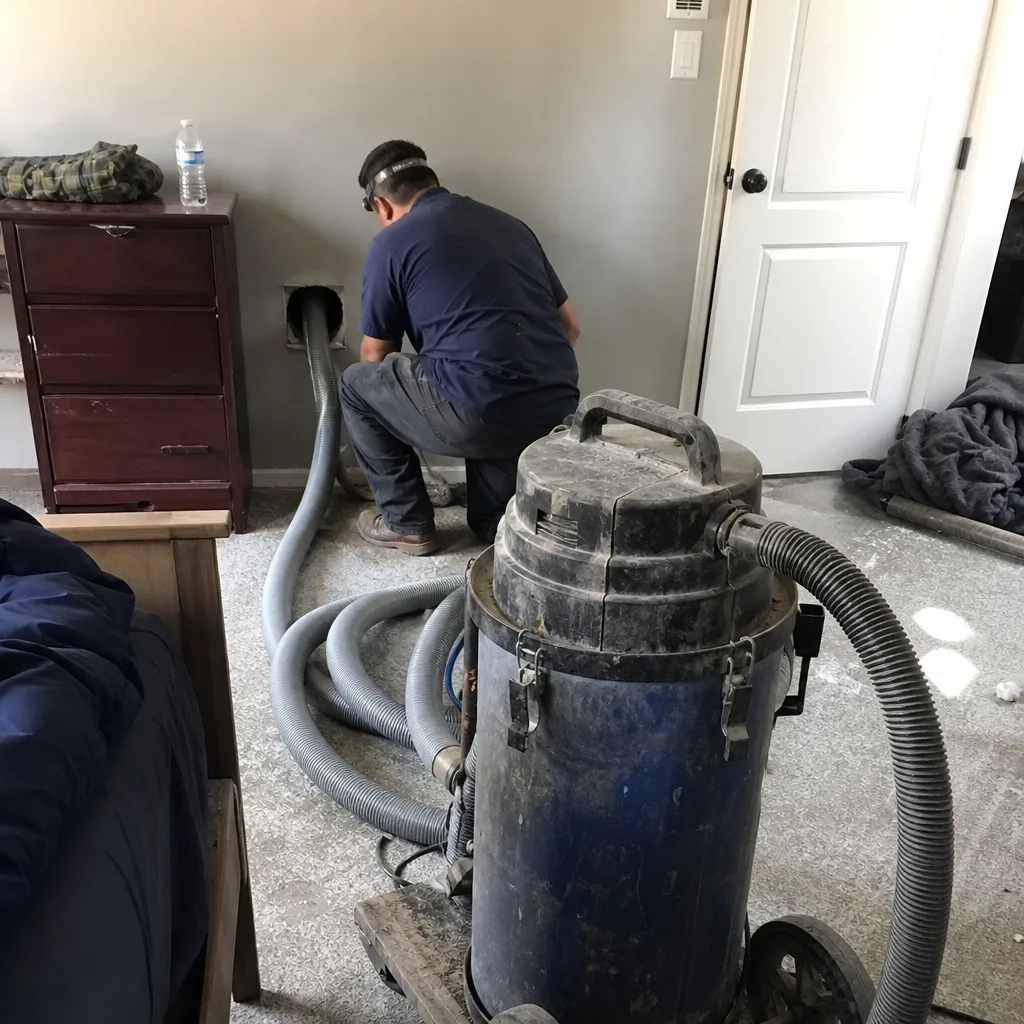 Before
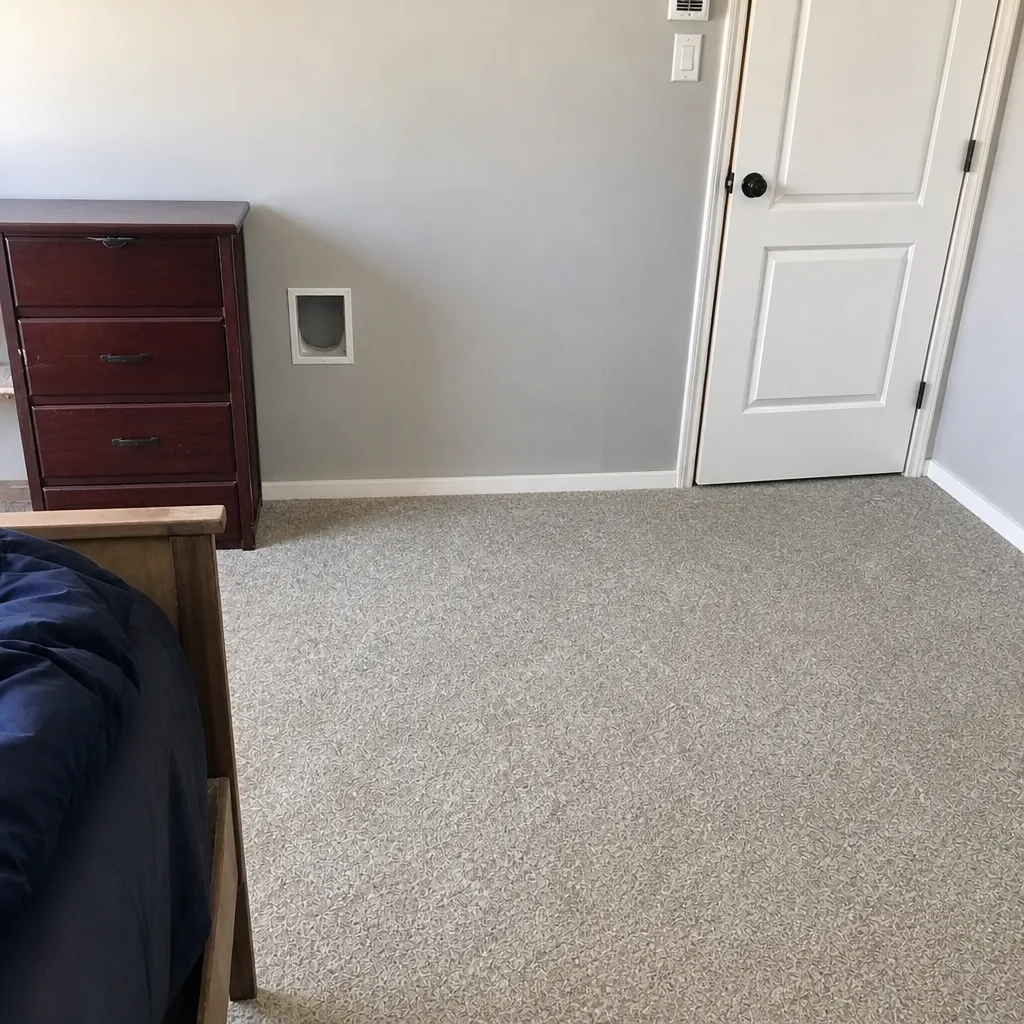 After
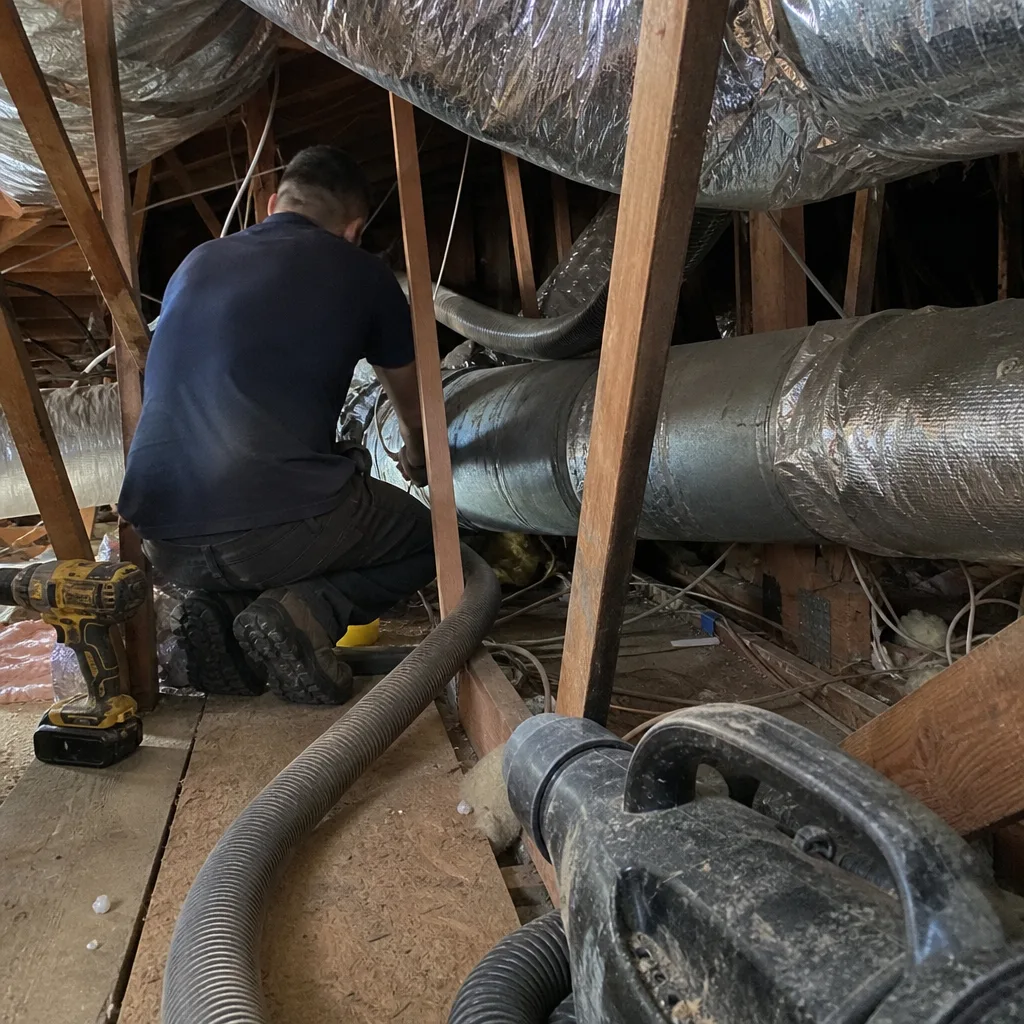 Before
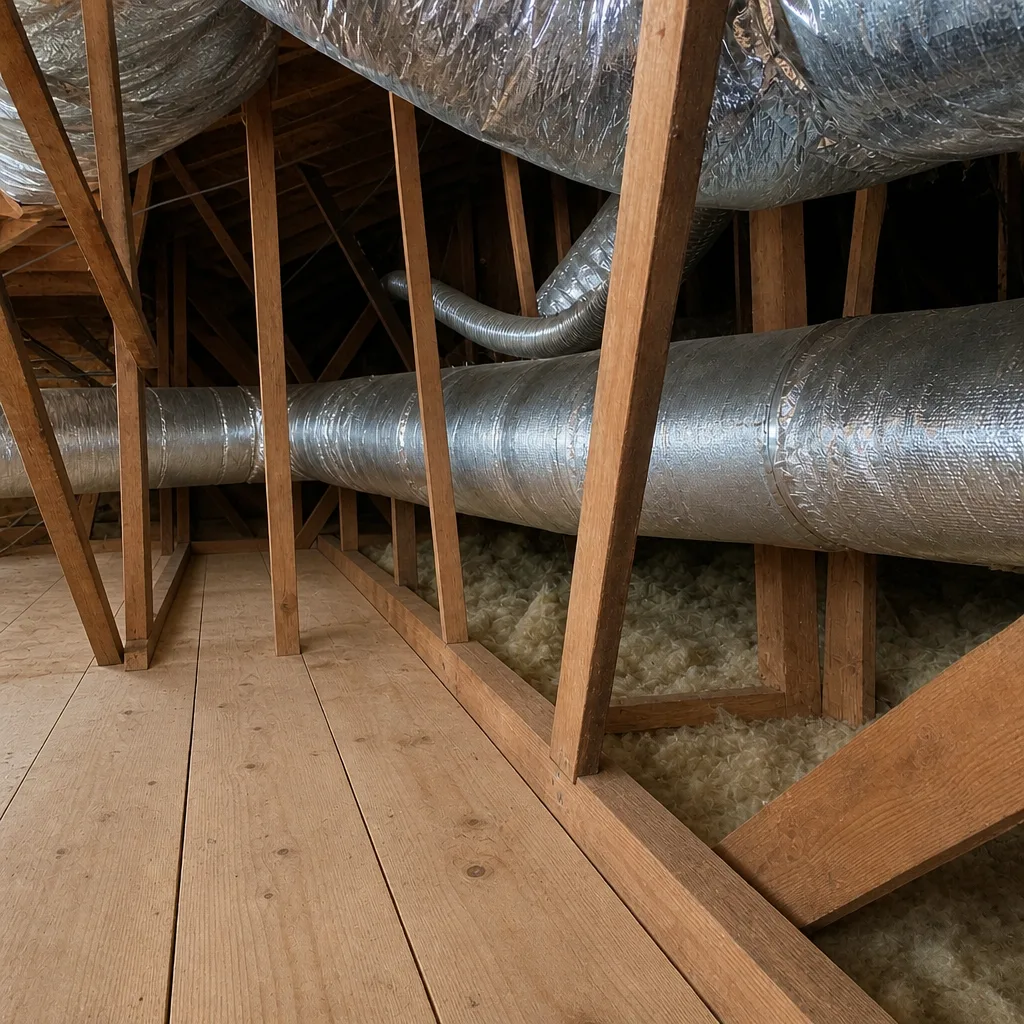 After
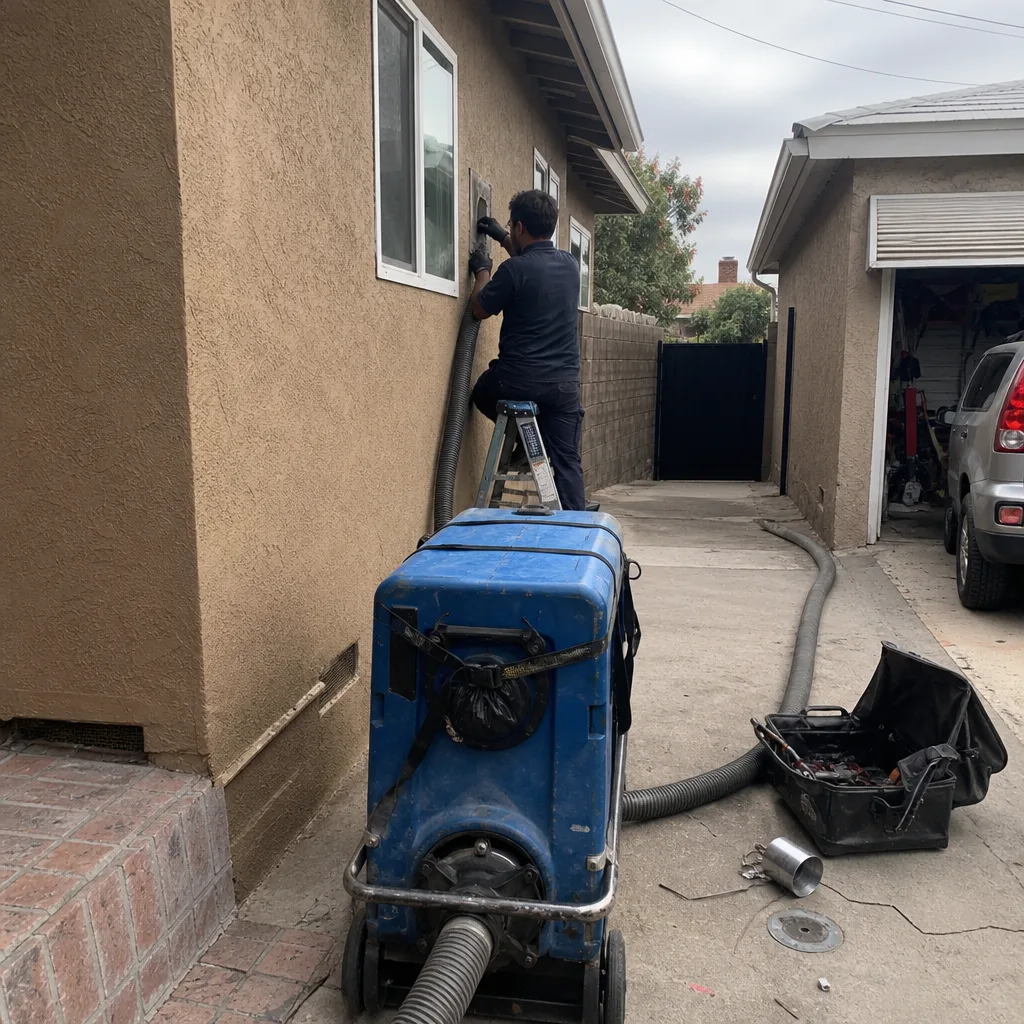 Before
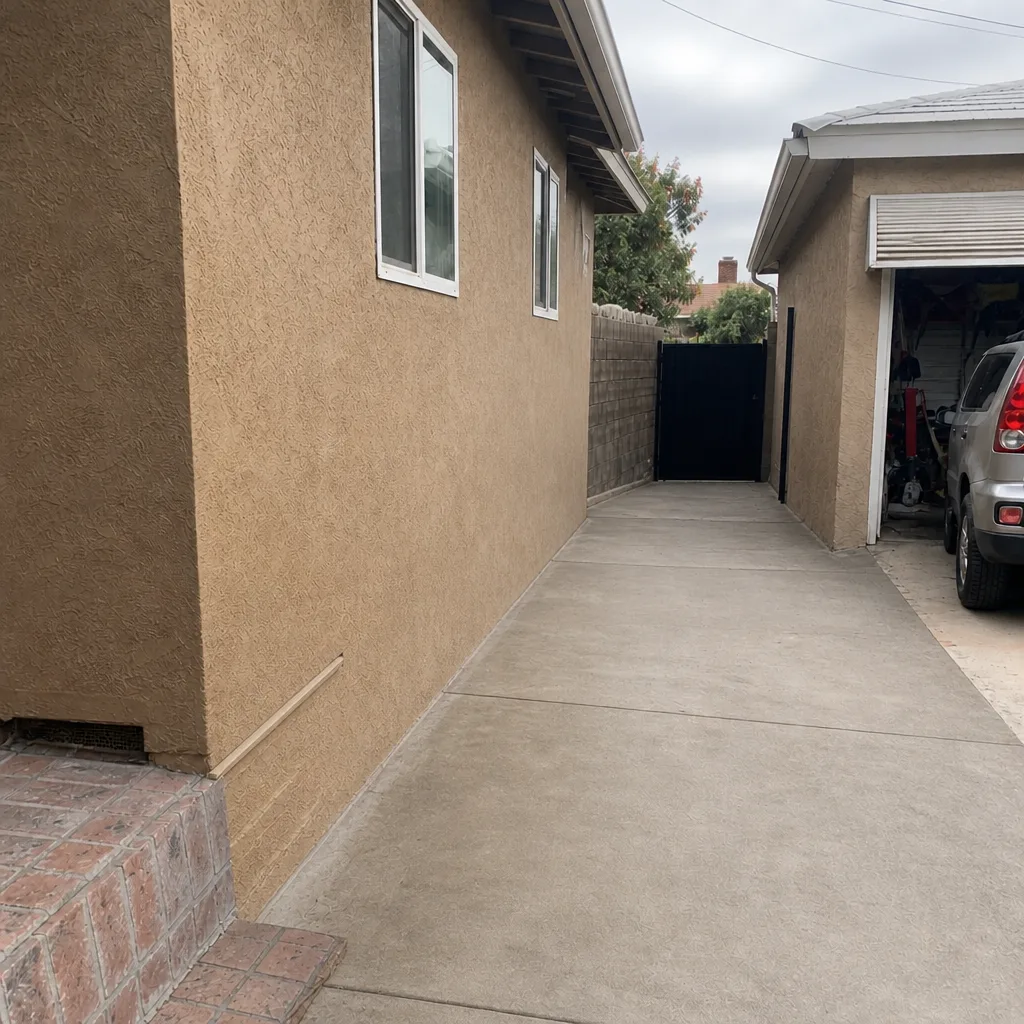 After
When to Call a Professional
Some duct issues are obvious and wait a few weeks. Others need a call now. Call a professional if you see visible dust blowing out of registers when the system runs, if there’s a musty smell coming from the vents, if you’ve recently finished a renovation and sawed drywall or sanded floors, or if the system makes a rattle or whistle that wasn’t there before. Call sooner if anyone in the household has allergies or asthma, or if a young child or pets share the space – the dust load matters more, not less, in those homes. And treat a dryer vent that runs long or vents through a wall or roof as a fire-safety call, not a someday item.
Air Duct Cleaning West Anaheim offers free estimates in West Anaheim – call (866) 937-8584. The written estimate sets the price before any work starts. We answer 24/7, with fast dispatch from 7am to 7pm, Sunday through Friday.
Frequently Asked Questions
A typical whole-system duct cleaning in West Anaheim is quoted per job, not per vent, with the final total set by the written estimate after inspecting the system. The price reflects the size of the system, the number of runs, and whether repair or sanitizing is included. Call (866) 937-8584 for a free estimate.
Cheap quotes are almost always smaller jobs with the same name. A low per-vent price usually hides additional charges that arrive on the invoice, and the equipment used is often a portable shop vac rather than a mechanical-agitation and negative-air extraction system. When you compare quotes, compare whole-system totals and ask what equipment is included. Call (866) 937-8584 for a straight answer on pricing.
You’ll know if you ask for before-and-after photos of your own ductwork and a walkthrough of the blower compartment at the end of the job. A contractor who cleaned the system will have both. A contractor who didn’t will hesitate on both. Call (866) 937-8584 if you’d like to understand what our before-and-after documentation covers.
For most West Anaheim homes, every few years is reasonable – sooner if there’s a recent renovation, pets, allergies in the household, or visible dust at the registers. Homes in our climate run their HVAC year-round, which loads the system faster than in seasonal climates. Call (866) 937-8584 if you’re unsure whether your system is due.
Duct cleaning alone is lightly regulated in California, but duct repair and sealing and any HVAC work require a valid CSLB license, and every contractor should carry liability insurance regardless. Verify both with the CSLB and with the insurer before booking. Call (866) 937-8584 and we’ll explain what verification you should ask any contractor for.
Yes – the full air pathway is one job. Cleaning the ducts without cleaning the blower and air handler leaves the dust source in place, so our HVAC cleaning service is scheduled alongside duct work rather than treated as a separate problem later. Call (866) 937-8584 to talk through what your system needs.
The Bottom Line
Hiring a duct cleaning contractor in West Anaheim comes down to three checks you can do before anyone enters the house: confirm the equipment (Rotobrush-style mechanical agitation, Nikro-style negative air extraction, contaminant-grade filtration), verify the license and insurance, and demand a whole-system price in writing with a clear scope and before-and-after photos at the end. The market has plenty of low-bid operators who count on homeowners not knowing the difference. Now you do. If you want a contractor who leads with the equipment and the written estimate, call Air Duct Cleaning West Anaheim at (866) 937-8584 for a free estimate – we answer 24/7, with fast dispatch from 7am to 7pm, Sunday through Friday.
Written by the team at Air Duct Cleaning West Anaheim.