
Last updated November 24, 2026
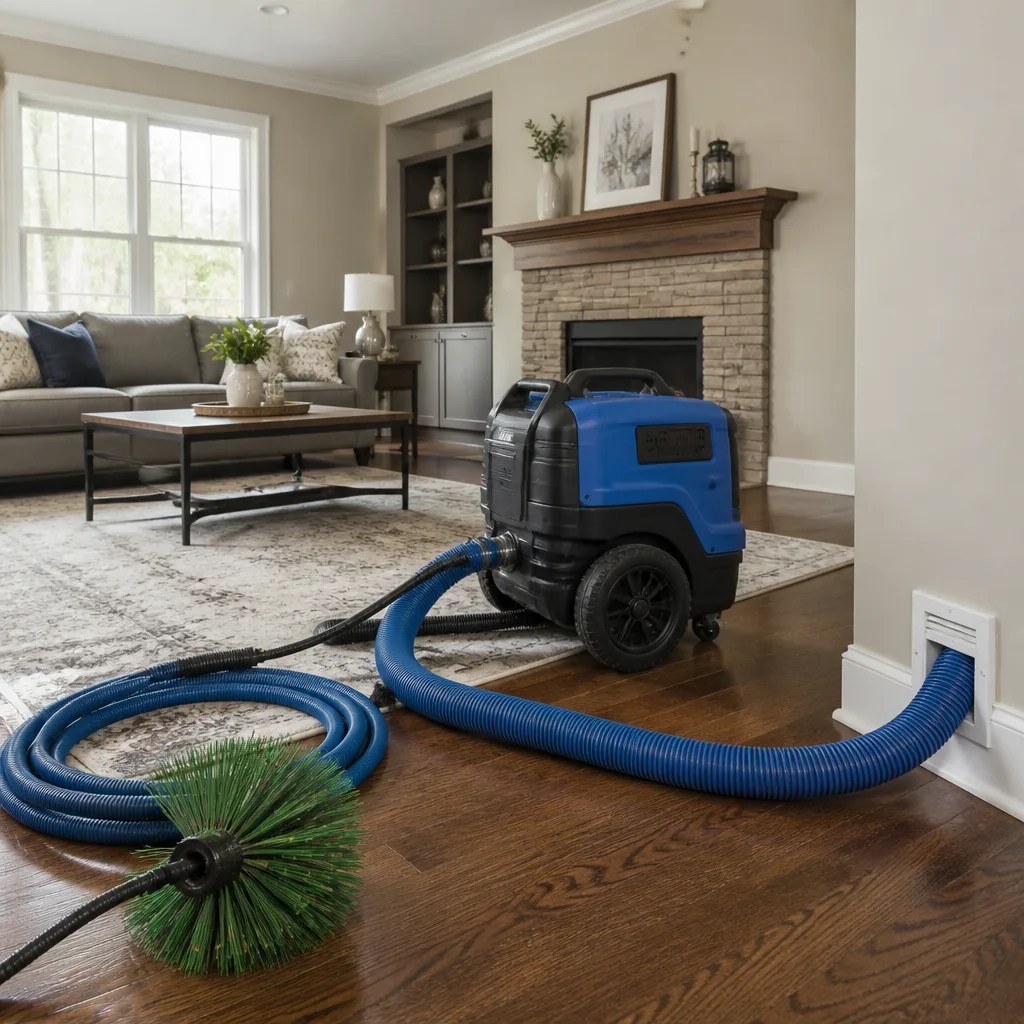 Whole-home duct cleaning
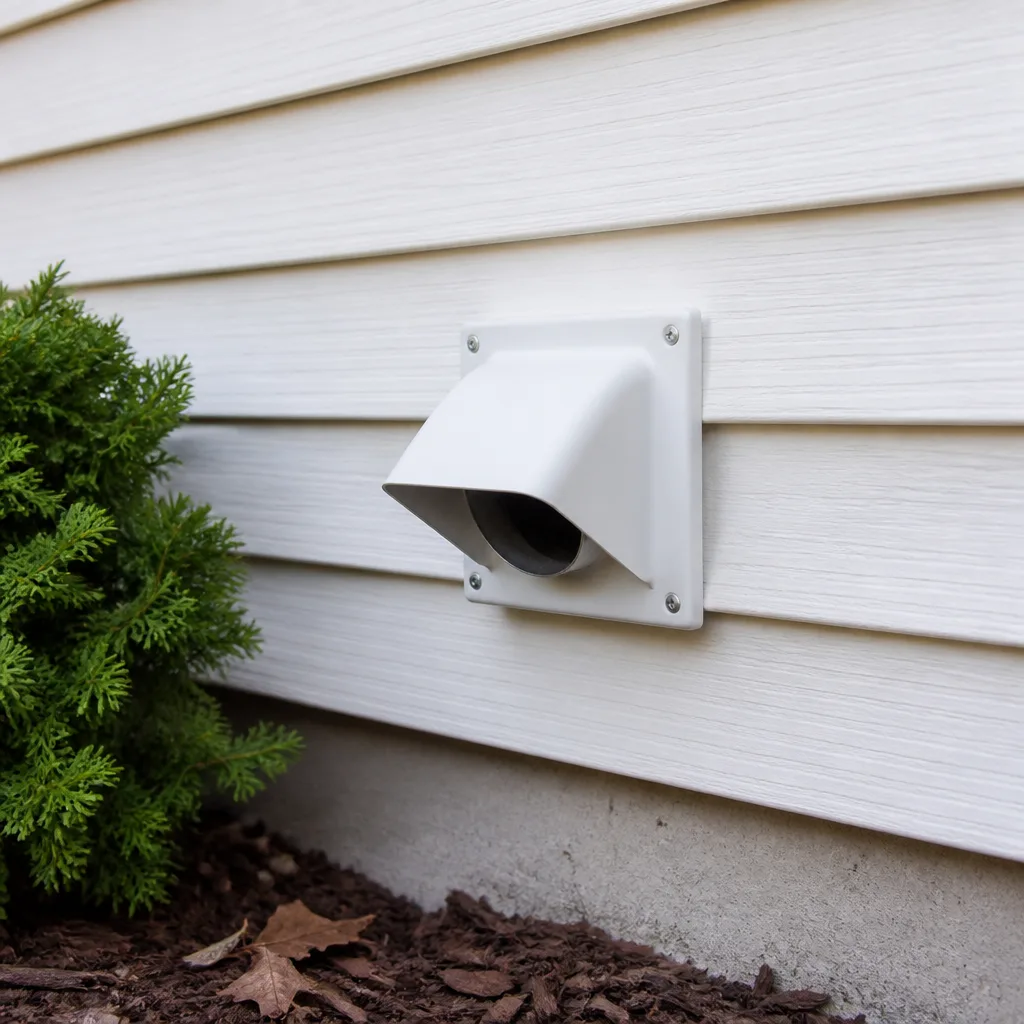 Dryer vent cleaning
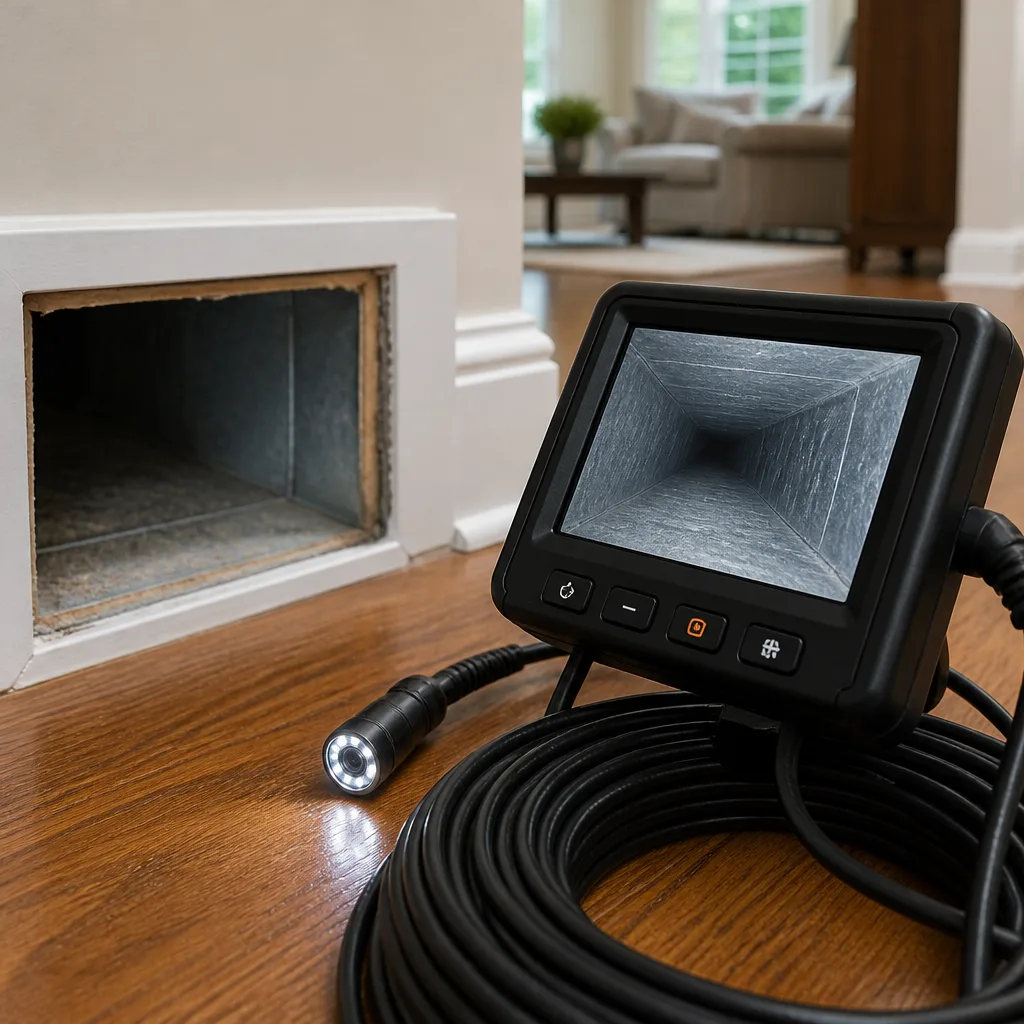 Camera inspection
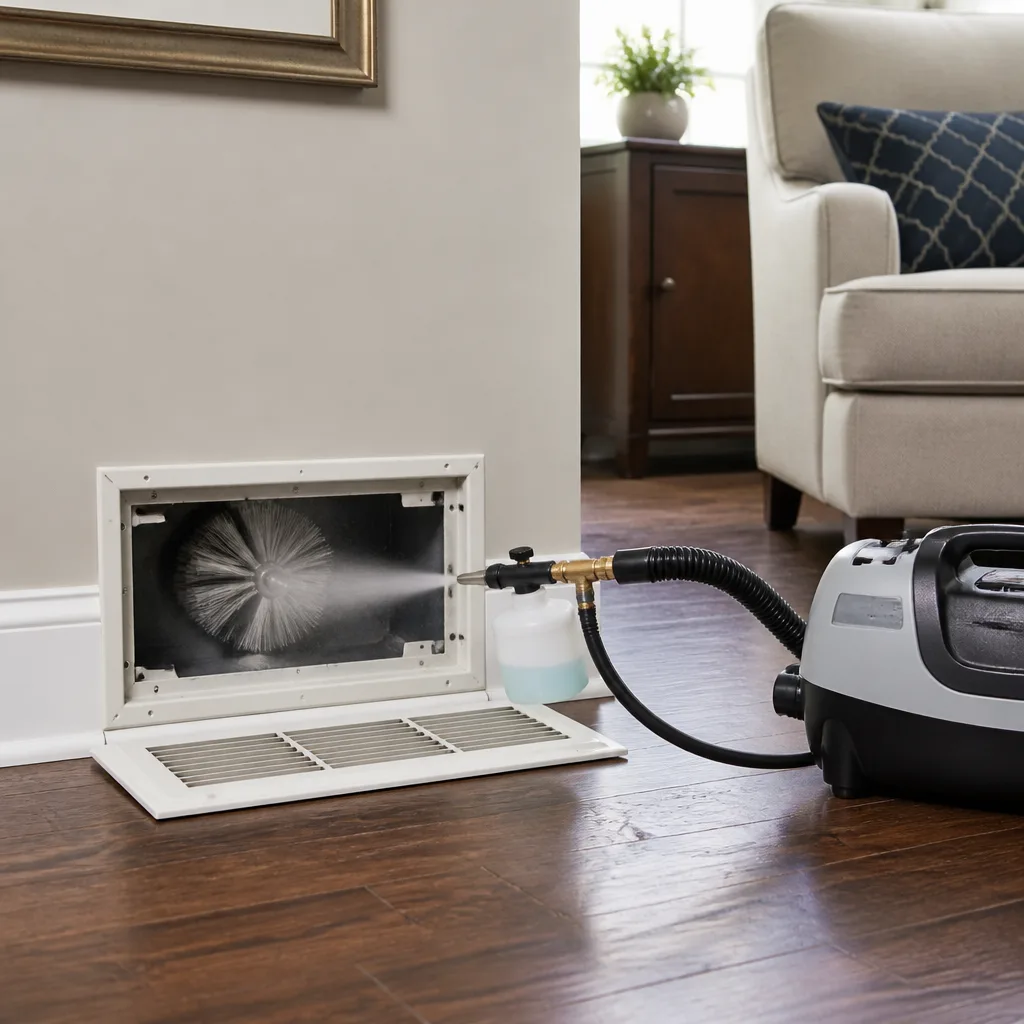 Sanitizing & deodorizing
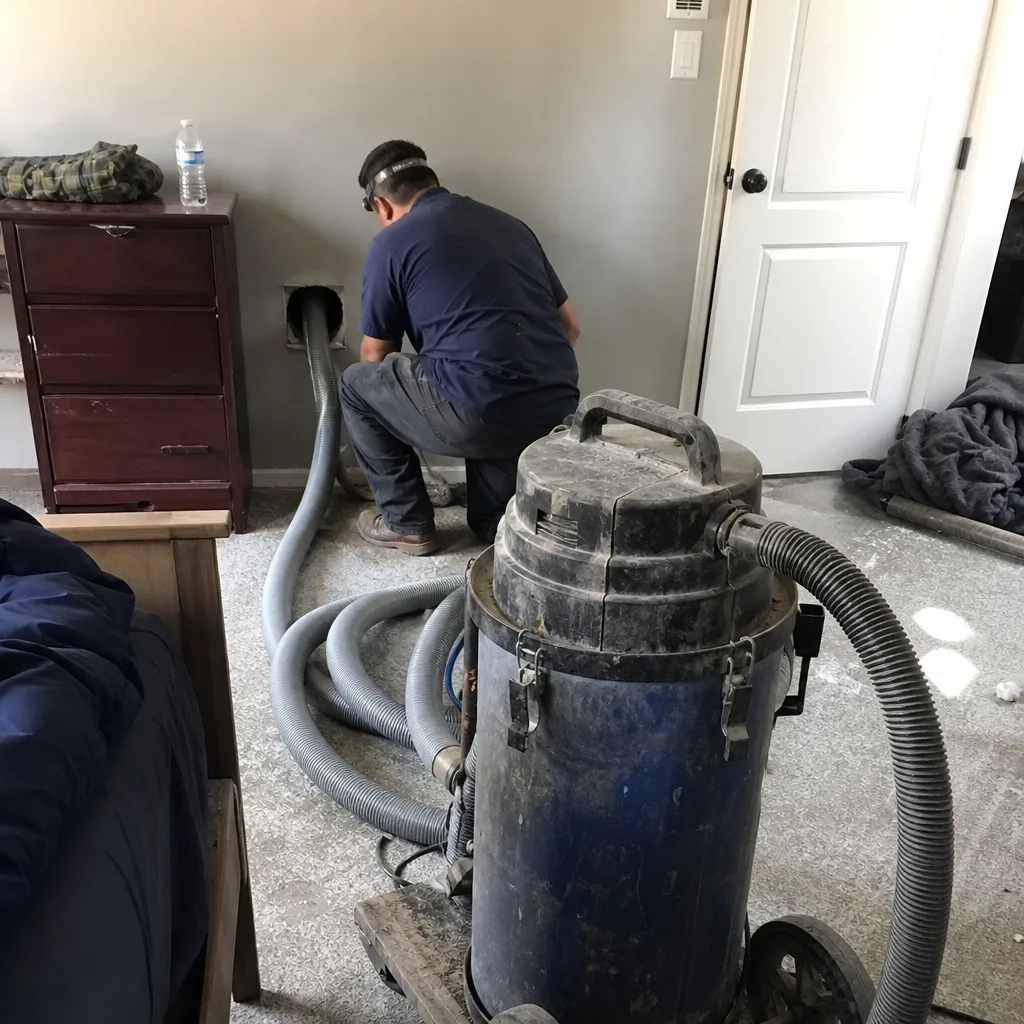
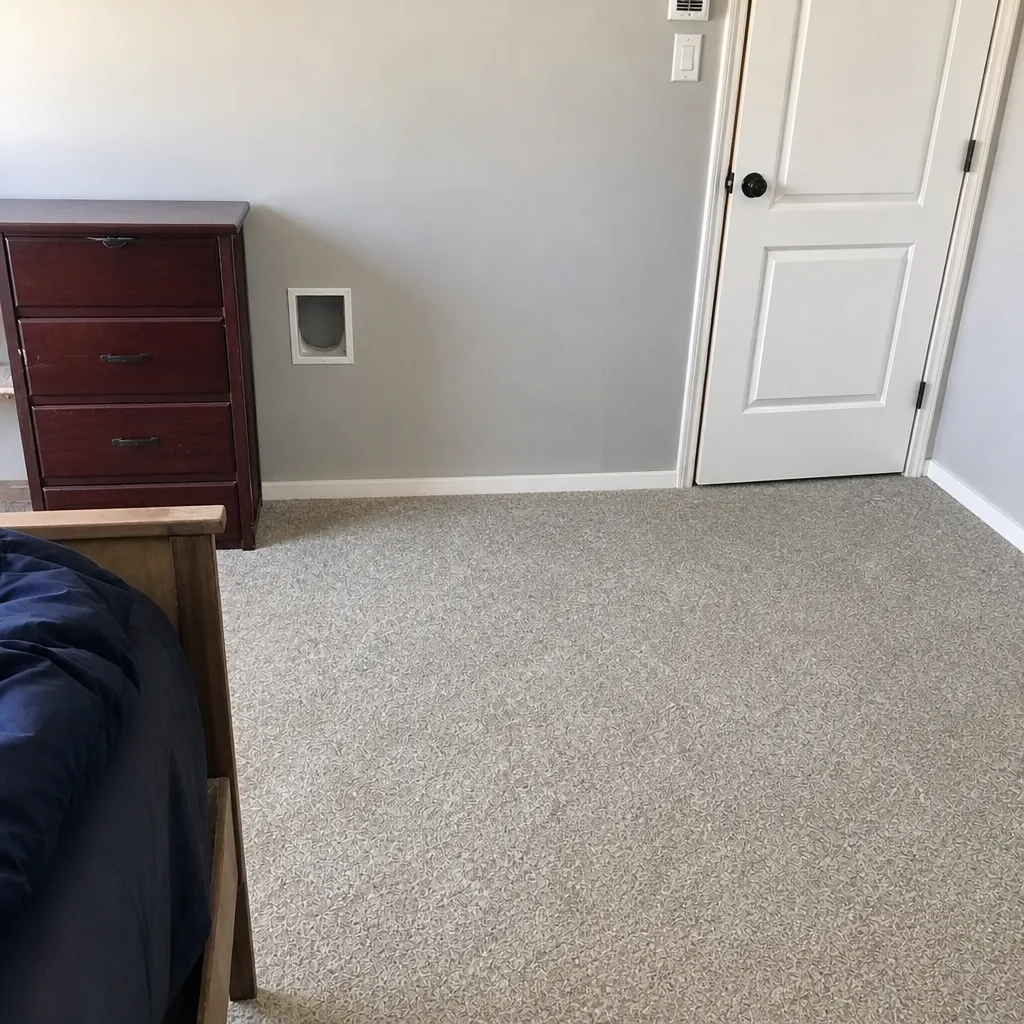
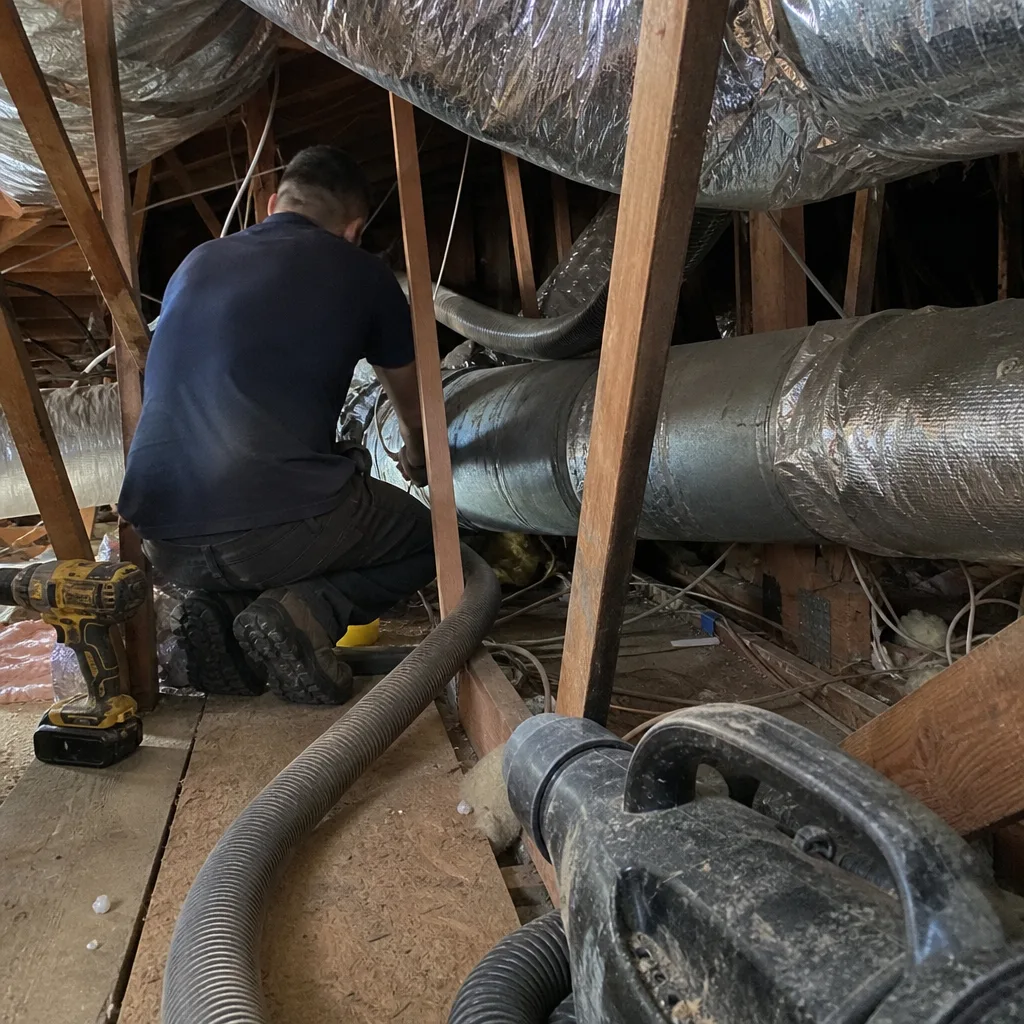
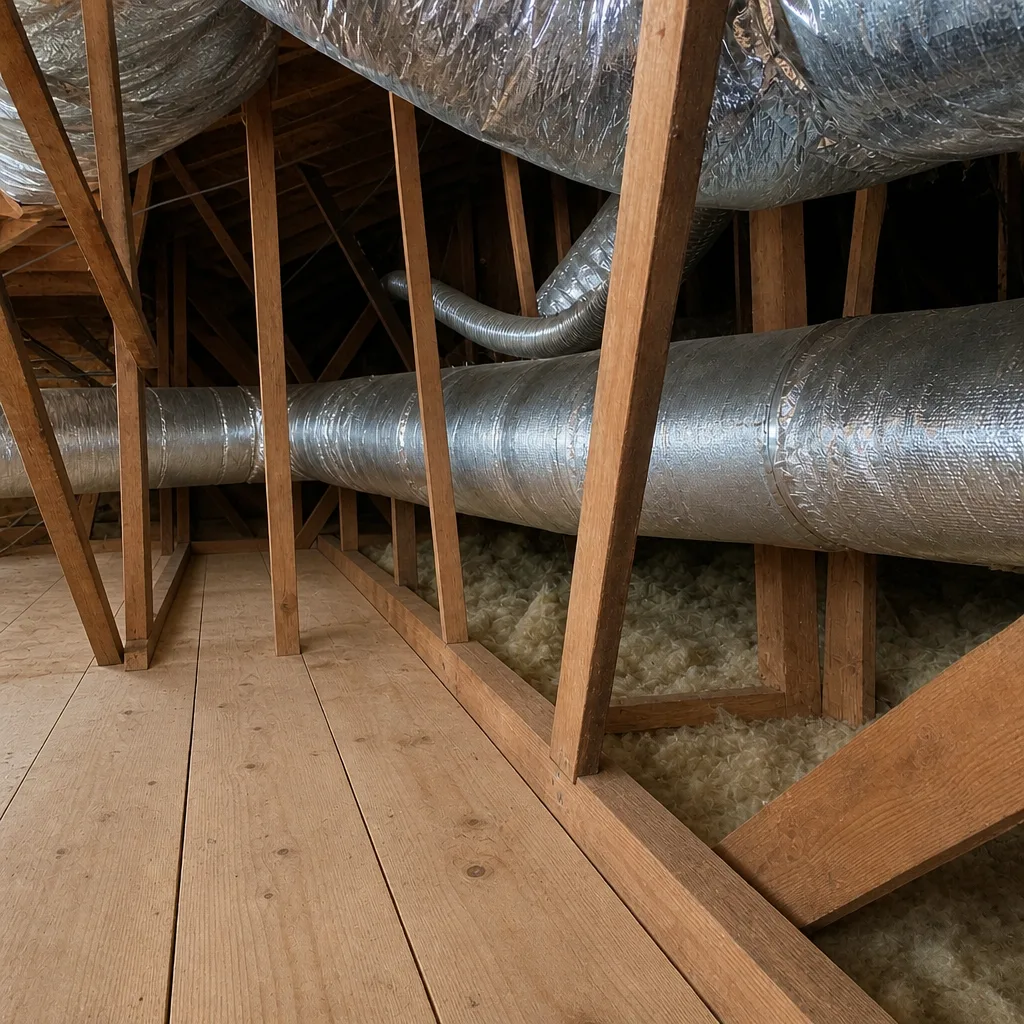
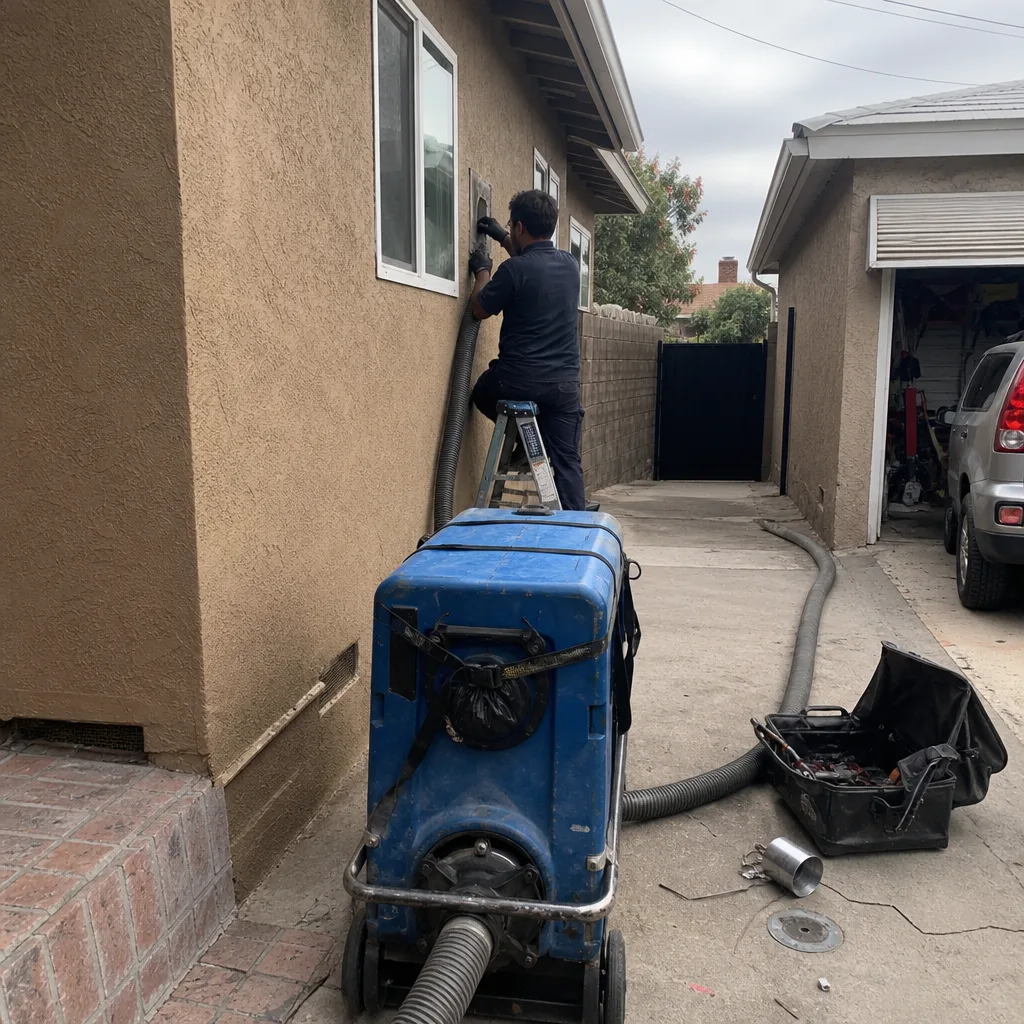
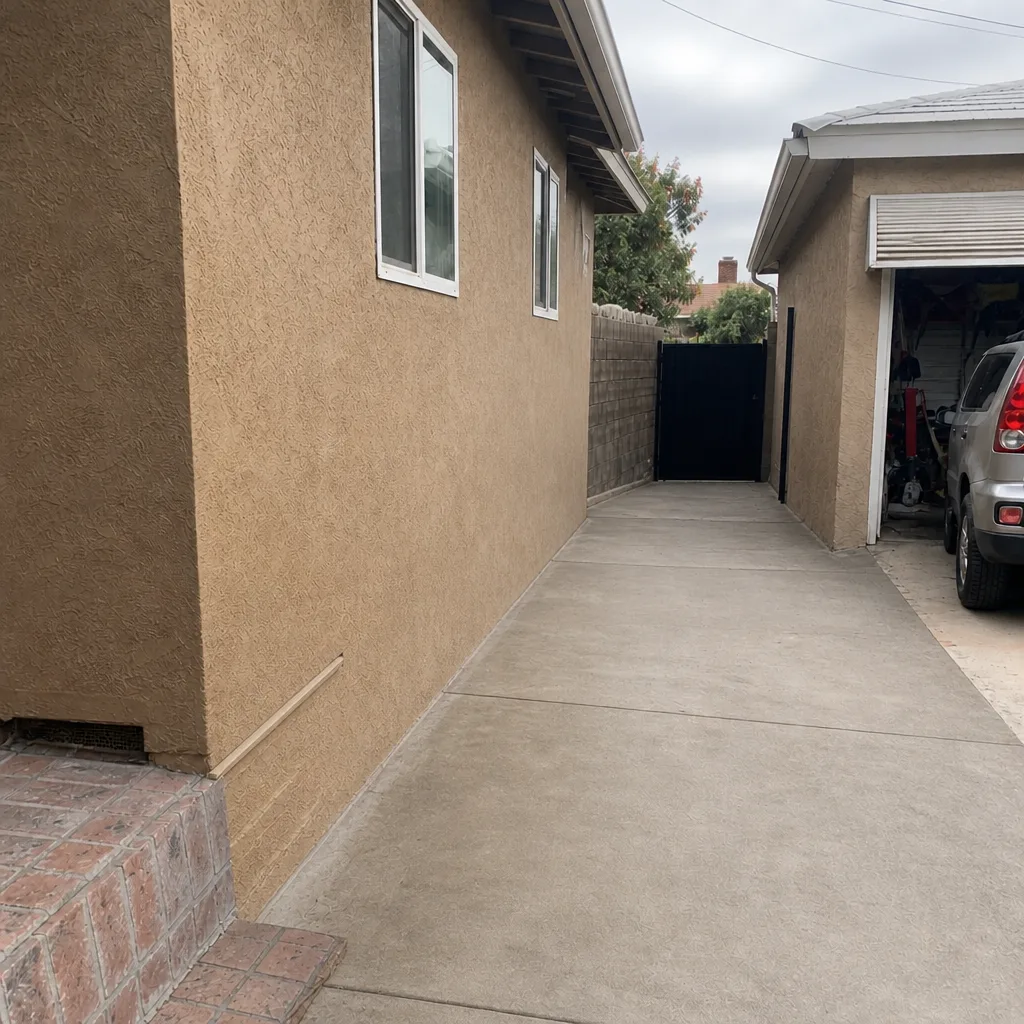
Whole-system duct and dryer vent check with before-and-after photos - you see exactly what came out of your vents
That "$99 whole-house special" is a bait ad - the real number appears once they are in your hallway, or the "clean" is a shop-vac at the register. We photograph the inside of your ducts before and after instead.
Air Duct Cleaning Warning Signs: A West Anaheim Homeowner’s Reference Guide
Visible dust puffing out of a register isn’t the warning sign. It’s the confirmation that the problem has already been developing for months. By the time you can see particles floating in a sunbeam, contamination has usually been building through the whole air pathway while the system looked and sounded normal. The early signs are quieter: a room that never quite warms up, a faint smell that shows up only in the first minute of the system running, an allergy pattern that tracks your thermostat instead of your yard. This guide is a West Anaheim reference for reading those early indicators with nothing more than your own senses, a thermometer, and a little attention. You’ll learn what each clue usually points to and when it’s time to call.
Quick Answer
The earliest warning signs of dirty ductwork are uneven room temperatures, a musty or metallic smell in the first minute the system starts, unusual buildup patterns around registers, rising utility bills without a usage change, and allergy symptoms that flare when the HVAC kicks on. Visible dust is a late-stage sign, not an early one. In West Anaheim’s mild climate, systems often run intermittently, which can let contamination accumulate slowly enough that you never notice a single dramatic change.
Styles & brands we work with
- Whole-home duct cleaning
- Dryer vent cleaning
- Camera inspection
- Sanitizing & deodorizing
Table of Contents
- Why Uneven Room Temperatures Come Before Visible Dust
- What Musty and Metallic Odors at Startup Actually Mean
- Reading Register and Grille Buildup Patterns
- Tracing a Rising Utility Bill Back to Restricted Airflow
- Allergy Symptom Timing: Why Your Ducts, Not Your Garden
- How to Do a Simple Room-to-Room Airflow Comparison
- What Professional Equipment Finds That Your Eyes Can’t
- Common Mistakes to Avoid
- When to Call a Professional
- Frequently Asked Questions
Why Uneven Room Temperatures Come Before Visible Dust
Temperature inconsistency is the most overlooked early indicator. When one bedroom always runs two or three degrees warmer than the living room, most homeowners blame a sun-facing wall, a drafty window, or a thermostat location. Sometimes that’s right. But when the gap appears gradually and settles into a pattern that ignores the season, contaminated ductwork is a common cause. Debris coating the inside of a branch duct narrows the pathway, and the room on the end of that run gets a weaker, uneven flow.
Here’s the practical version of how to spot it:
- Pick a mild afternoon when the system has been running a while and the house feels steady.
- Set an inexpensive thermometer in each main room, at seated height, away from windows and direct sun.
- Note the reading in each room over a few days at the same time.
- Look for one or two rooms that consistently and stubbornly read 2-4 degrees off the rest of the house.
A single room lagging is often a duct design or damper issue. Several rooms drifting, especially rooms farthest from the air handler, points more toward internal restriction across the system. In West Anaheim, where the mild weather means the system frequently cycles rather than running hard for weeks at a time, that subtle drift can go unnoticed for a whole season. The pattern matters more than any single reading.
Contamination doesn’t just narrow a duct; it also changes the surface inside, and rough, coated ductwork creates friction that a clean metal or flex duct doesn’t. The system can’t push the same volume, so the far rooms feel it first. That’s why uneven temperature is such an early clue: it appears while the duct is still far from visibly dusty at the register.
What Musty and Metallic Odors at Startup Actually Mean
The timing of an odor tells you as much as the smell itself. A smell that arrives in the first minute the system starts and fades a few minutes later is usually air moving across contaminated surfaces inside the ductwork, not a problem in the room. A smell that persists the entire time the system runs points somewhere different and often more serious. Learning to separate these two patterns saves a lot of guesswork.
- Musty odor in the first minute, fading: often mold or mildew spores on damp dust inside the duct or on the evaporator coil area. The first rush of air lifts the smell, then the concentration drops.
- Musty odor that stays strong: may indicate an active moisture problem, a saturated coil, or a wet section of duct that keeps feeding spores into the airstream for as long as air moves.
- Metallic or stale smell: commonly decaying organic debris, old dust, or material that’s been sitting in a dead-end run or a poorly sealed junction.
- Sharp, ammonia-like, or distinctly animal smell: possibly pest intrusion, including rodent droppings or nesting material inside the system.
West Anaheim’s climate is dry for most of the year, but a home with a leaking coil, blocked condensate line, or a duct that ran through a damp crawlspace can still hold enough moisture to grow mold. The smell at startup is your first evidence. Persistent odors deserve a professional look because they suggest a source that cleaning alone won’t fix if the moisture is still present.
We put Abatement Technologies contaminant-control filtration on every job because odors are material in the air, not just a smell to spray over. If you’ve already tried an air freshener or a scented filter and the smell returned within a week, that’s a sign the source is inside the air pathway.
Reading Register and Grille Buildup Patterns
A thin, even film of household dust on a supply register is normal and comes back after any cleaning. What you’re watching for is buildup that looks different: uneven, patchy, dark, greasy, or growing faster on some registers than others. The pattern across your whole home, not any single register, is the real signal.
Here’s how to read the buildup you’re seeing:
- Uniform light gray dust everywhere: typical household dust. Not a duct warning by itself.
- Dark or black streaks radiating from the fins: a common sign of fine soot, biofilm, or long-accumulated material that’s been pushed out by the airstream.
- Patchy greasy film: often cooking oil or smoke residue drawn into the return side, which coats duct walls and grabs dust.
- Small scratch or gnaw marks near the grille, or small dark droppings nearby: possible rodent or pest activity in the duct system, worth professional inspection.
- Buildup growing much faster on registers near certain rooms: a restriction or leak in those specific branches.
A register that stays clean while its neighbor in the same room collects a dense patch of buildup is a classic uneven-flow clue. That difference tells you the air isn’t distributing evenly through the system. In West Anaheim’s dry-climate homes, dust accumulation usually looks more like fine gray powder than damp grime, but any dark, sticky, or patchy pattern deserves a closer look.
Before you decide anything, check for the obvious leak first: a gap at the register boot, a loose seal behind the grille, or a disconnected flex duct. Leaks pull unfiltered air from whatever space the duct runs through, and the buildup that follows looks exactly like dirty-duct buildup.
Tracing a Rising Utility Bill Back to Restricted Airflow
An energy bill that climbs without any change in usage is easy to blame on rates or weather. Sometimes that’s accurate. But if your habits haven’t changed and the bill has moved up steadily over a couple of billing cycles, restricted airflow from contaminated ductwork is a real candidate. When a duct’s interior is coated with debris, the blower motor works harder and pushes less air, and the system runs longer to reach the temperature you’ve set.
Rough benchmarks worth holding in your head, based on typical residential patterns rather than any single home:
- A modest, steady increase (roughly 10-15 percent) over a couple of months with no behavior change: worth checking ducts, filter, and coil together.
- A jump that appears right after a stretch when the system ran often: a common sign of buildup that finally restricted flow enough to matter.
- Bills that stay high even after a fresh filter: a filter can only do so much. If a new filter doesn’t change the number, the restriction may be downstream.
The order of checks matters. Change the filter first and watch one full cycle. If the cost stays elevated, the next thing to inspect is the duct interior and the evaporator coil. Electrical and refrigerant issues can also raise a bill, which is why we never treat a bill alone as proof. It’s a prompt to look, not a diagnosis.
Comparing this month to the same month last year helps more than comparing to a neighbor, since every home’s usage pattern differs. If you can’t find a usage or rate explanation, airflow restriction deserves a professional look, especially in a West Anaheim home that also shows one of the other signs on this list.
Allergy Symptom Timing: Why Your Ducts, Not Your Garden
Allergy symptoms that worsen specifically when the system kicks on point to something inside the air pathway, not outdoor allergens drifting through your windows. Outdoor pollen exposure tends to build through the morning and fade in the evening. Symptoms tied to duct contamination track the thermostat instead: they flare in the first 10-15 minutes after the HVAC starts, ease when it cycles off, and return the next time it engages. That pattern is the giveaway.
A simple way to test the pattern:
- Pay attention to your symptoms on a day you never run the system (say, a mild West Anaheim afternoon with the windows open and the HVAC off).
- Note whether symptoms flare within 15 minutes of the system starting the next time it runs.
- Repeat across a few days. If the pattern holds, the system is part of the story.
- Watch where in the home it hits hardest. Symptoms that are worst in the rooms with the earliest-in-line registers suggest upstream contamination.
Symptoms like these affect more than the person with allergies. Homes with young children, asthma, or pets tend to notice it first because those occupants spend more time near the floor where heavy particles settle. West Anaheim’s dry, warm air keeps particles airborne longer, which can make the airstream-timing pattern clearer here than in a humid climate. We always mention that we can’t diagnose or treat allergies. But we can identify a dirty air pathway as a possible contributor, and clean it so the air you breathe at least starts from a cleaner baseline. For households with health concerns, we recommend talking to your doctor about the symptom pattern while we handle the ductwork.
How to Do a Simple Room-to-Room Airflow Comparison
You don’t need special tools to see whether the system is distributing air evenly. A thin sheet of tissue or a strip of paper held near a supply register will show you the strength and direction of the airstream. This is the single most useful early test a homeowner can run, and it takes maybe ten minutes across a whole house.
- Turn the system on and let it run for five minutes so airflow settles.
- Hold a piece of tissue near each supply register, about an inch from the grille.
- Watch how far the tissue moves. Notes the relative strength: strong flutter, weak flutter, barely moving, or pulled toward the register (which means that one is a return).
- Record the result room by room.
- Look for registers that read noticeably weaker than the rest.
A register with weak flow needs to be treated in context. If it’s always been weak and the room has always been slightly cool, it may simply be an undersized branch or a closed damper. If it’s gotten weaker over time, restricted ducts are a leading candidate. The same test done mentally before and after a filter change will often tell you whether the restriction is at the filter or downstream.
There’s a limit to what this test can tell you. It can’t measure static pressure, spot a disconnected flex duct hidden in a wall, or read the interior condition of a duct run. When the test shows a clear, consistent imbalance across several rooms, that’s the point to bring in the professional equipment you’d expect in a commercial setting, used in your home.
What Professional Equipment Finds That Your Eyes Can’t
Everything above is designed for a homeowner with a thermometer and a pair of eyes. The professional inspection goes further because some problems stay invisible until a camera and negative air pressure are on them. That’s the difference between cleaning what you can reach and cleaning the whole air pathway.
- Interior condition of every branch: a camera shows what the register face never will.
- Pressure and airflow measurement: quantifies the restriction the tissue test only hints at.
- Contaminant control with negative air pressure: captures material as it’s dislodged instead of redistributing it through the home.
- Seal integrity: locates leaks and disconnected joints that let unfiltered air in.
We use Rotobrush and Nikro equipment because duct cleaning is mechanical agitation plus high-powered extraction, not a shop vac job. The Rotobrush rotary brush system agitates built-up material off the duct walls. The Nikro negative-air equipment pulls that material out with the kind of filtration you’d expect in hospital-grade work. On every job we deploy an Abatement Technologies contaminant-control filtration setup, so particles are captured as they lift rather than sent into the living space.
That approach is why the process doesn’t stop at cleaning. Clean ducts lead to sealed ducts, and we follow with duct repair and sealing where we find leaks, then air quality sanitizing as the final step. We also use Honeywell and Aprilaire filtration and sanitizing products when a home needs a filtration upgrade, and Guardsman protective treatments where post-clean surface protection makes sense. The point isn’t to sell you a bigger job. It’s that cleaning without sealing tends to bring the problem back, and this whole list of warning signs is easier to prevent than to catch.
Common Mistakes to Avoid
- Treating visible dust as your trigger. Waiting for a puff of dust means waiting for confirmation. Watch the subtle signs first and your ducts stay cleaner for longer.
- Blaming a room’s temperature on furniture or windows alone. Consistent 2-4 degree gaps across multiple rooms are a system signal, not an interior design one. Test the airflow before you replace a window.
- Ignoring a smell that shows up only at startup. A brief musty puff is often the earliest clue you’ll get, and it’s easy to dismiss because the smell fades.
- Assuming every dark streak on a register is dirty ducts. A disconnected flex duct or a gap at the register boot pulls unfiltered air from the wall cavity, and the buildup looks identical. Check the seal before anything else.
- Hiring a cheap brush-and-go job. A quick vacuum without negative air pressure can redistribute material into the rooms rather than remove it, and you’ll be right back here in six months.
- Over-watching the bill and under-watching the rooms. A rising bill is one signal among many, and the room temperatures and airflow test will usually flag a problem earlier.
- Skipping the dryer vent because it isn’t a comfort issue. Dryer vents are a fire risk, not a maintenance afterthought, and a duct cleaner who doesn’t handle them is leaving a real safety gap.
When to Call a Professional
Some signs are safe to watch and some are not. Call a professional now if you notice any of the following: a persistent musty smell that stays through the whole run cycle; scratch or gnaw marks or small droppings near a register; visible mold anywhere you can see it in the air pathway; a room temperature pattern that’s been worsening for weeks; or a bill that’s moved steadily with no usage change. The same goes for a dryer that takes longer than expected to dry one load, which needs the vent line checked rather than ignored regardless of anything else on the system.
Air Duct Cleaning West Anaheim offers free estimates in West Anaheim. Call (866) 937-8584. We answer 24/7. Fast dispatch from 7am to 7pm, Sunday through Friday. Our technicians have up to 11 years of experience, and we bring the equipment to do the whole job once.
Frequently Asked Questions
Uneven room temperatures, a musty smell in the first minute the system runs, patchy register buildup, a rising bill without a usage change, and allergy symptoms that flare when the HVAC kicks on. Visible dust comes later.
Hold a tissue near each supply register and compare how far it moves room by room. Consistent weak flow in the rooms farthest from the system usually points to internal restriction. Call (866) 937-8584 for an exact quote if the pattern is clear. Estimates are free.
It can, because debris coating the interior forces the blower to work harder and the system to run longer to hold your set temperature. Treat the bill as a prompt to look, not a diagnosis. Call (866) 937-8584 for a proper assessment; estimates are free.
A faint musty smell in the first minute often means material inside the duct lifted by the first rush of air. A smell that stays the whole time the system runs may point to an active moisture problem or saturated coil. Either deserves a professional look.
Outdoor pollen exposure builds through the day. Symptoms that start within 15 minutes of the HVAC turning on and ease when it stops are far more likely tied to material inside the air pathway than to the air outside.
Wiping the register face is fine and won’t hurt anything, but it does nothing for the interior of the duct, the seal integrity, or the coil. The real material is behind the grille, and that takes mechanical agitation plus negative-air extraction to remove. Call (866) 937-8584 for a free estimate.
The Bottom Line
The warning signs of dirty ductwork show up quietly: rooms that won’t hold temperature, smells that arrive at startup, uneven register buildup, rising bills without a usage change, and allergies tied to the thermostat instead of the yard. Watch those signs and you’ll usually catch a problem long before visible dust. In West Anaheim’s mild climate the system often runs intermittently, which makes the subtle clues easier to miss. When the pattern holds, that’s the point to bring in the equipment that can inspect and clean the whole pathway at once, including the air duct cleaning that starts the process. Ready to look? Call (866) 937-8584. We answer 24/7. Fast dispatch from 7am to 7pm, Sunday through Friday.
Written by the team at Air Duct Cleaning West Anaheim.
See the difference
 Before
 After
 Before
 After
 Before
 After