
Last updated November 24, 2026
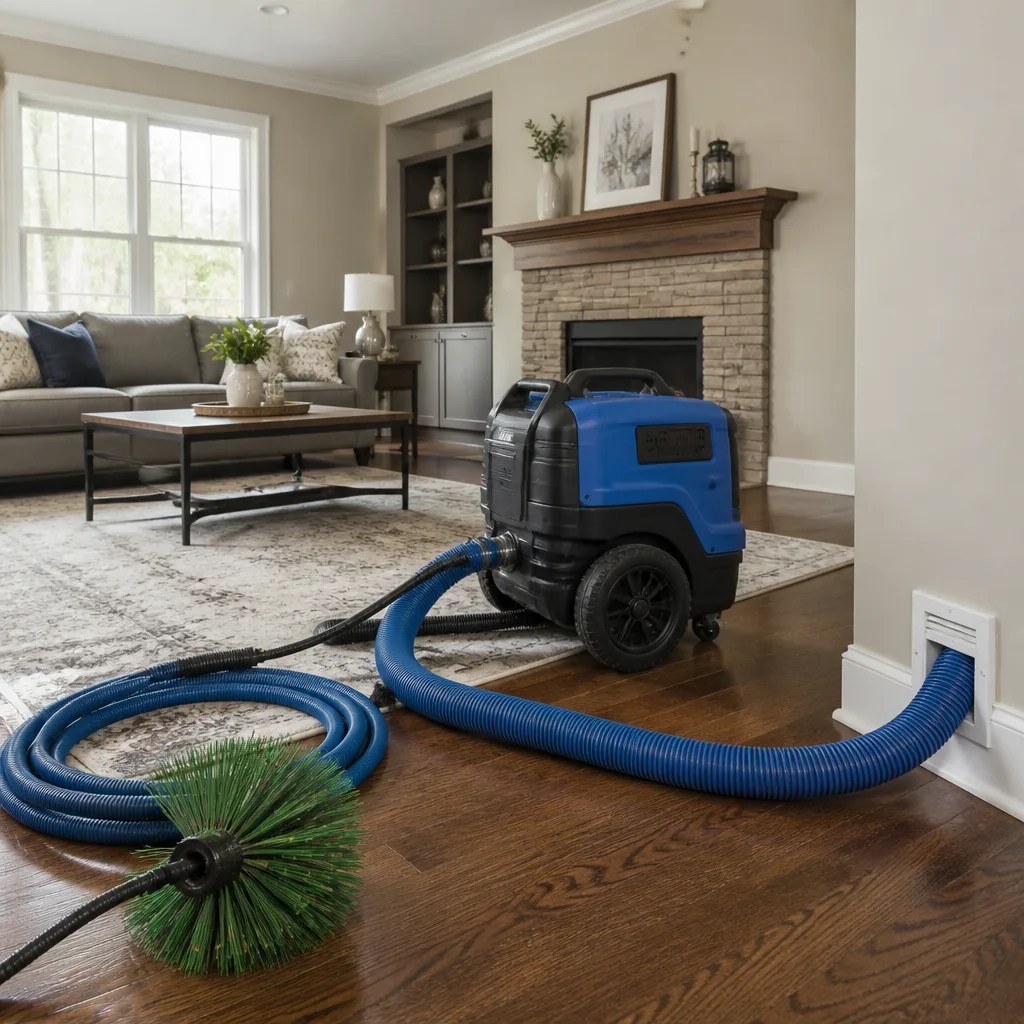 Whole-home duct cleaning
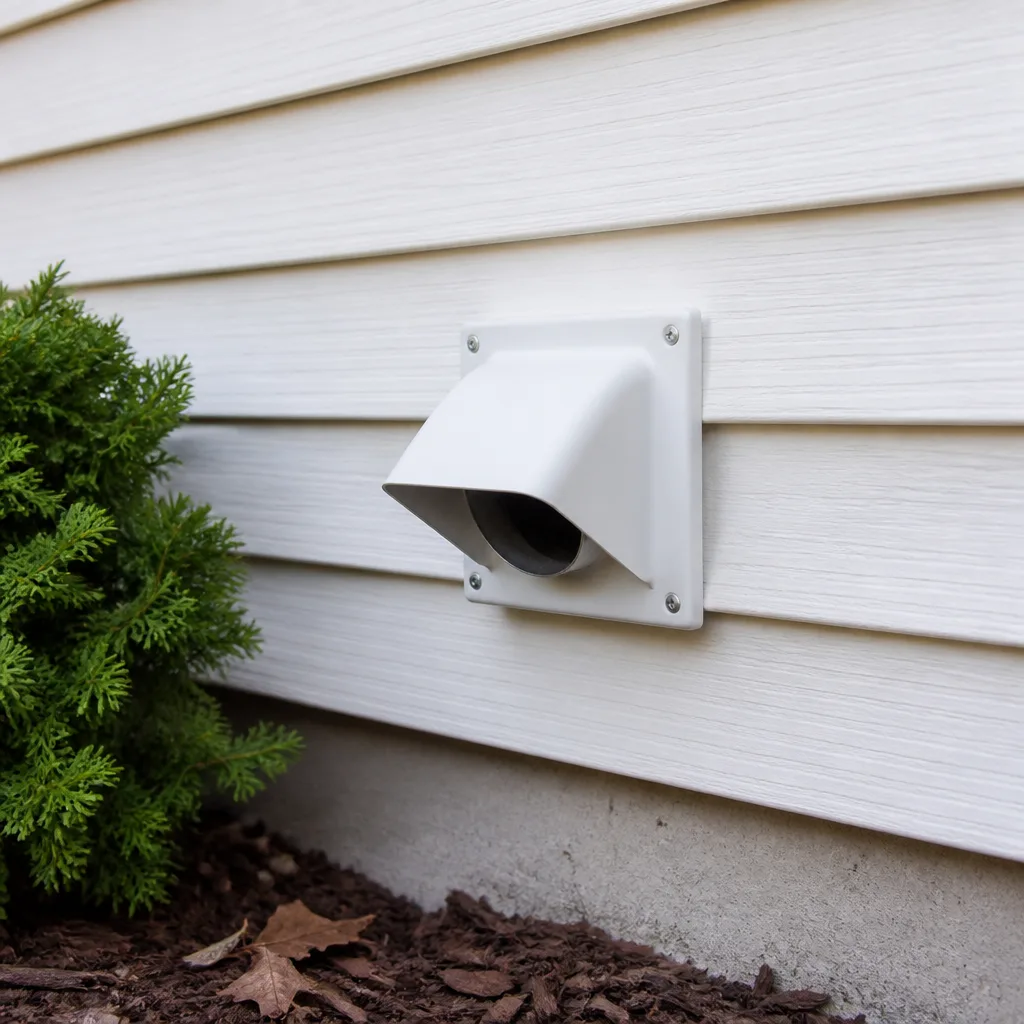 Dryer vent cleaning
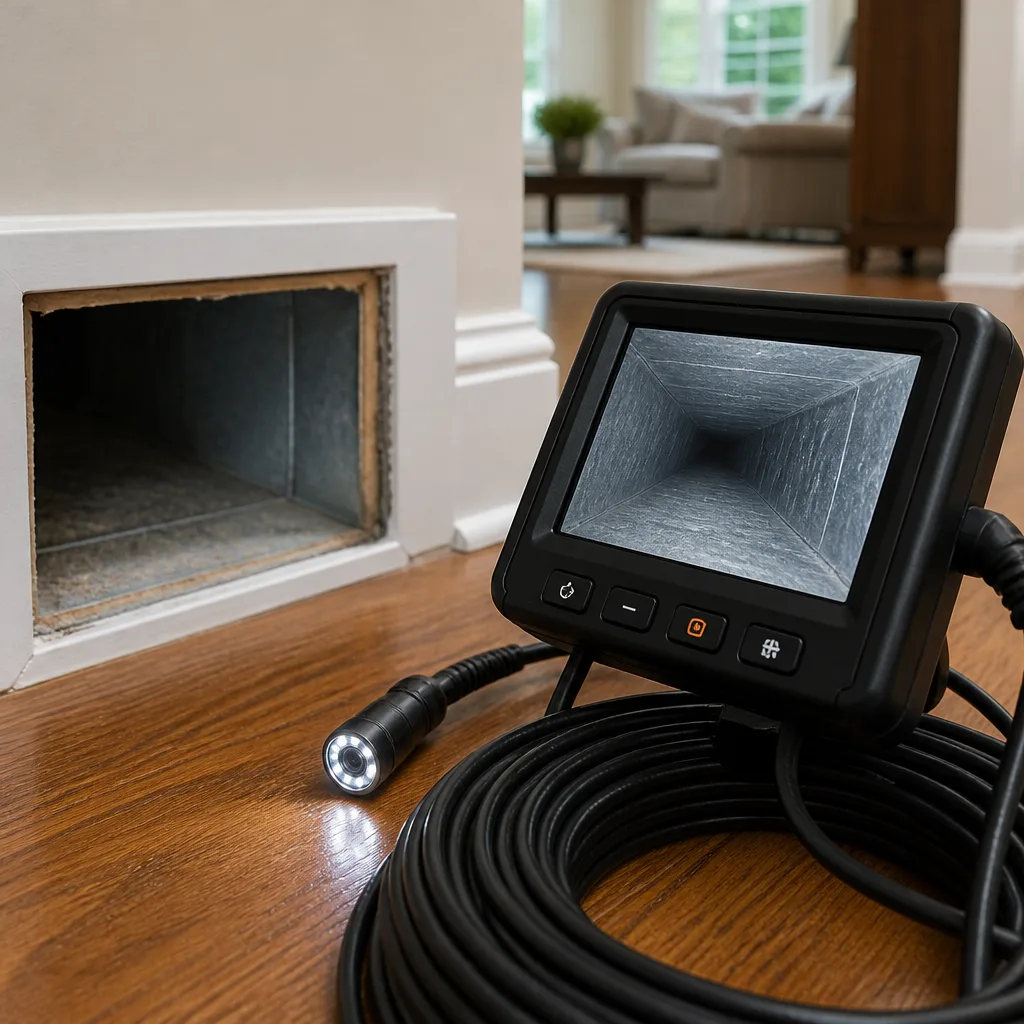 Camera inspection
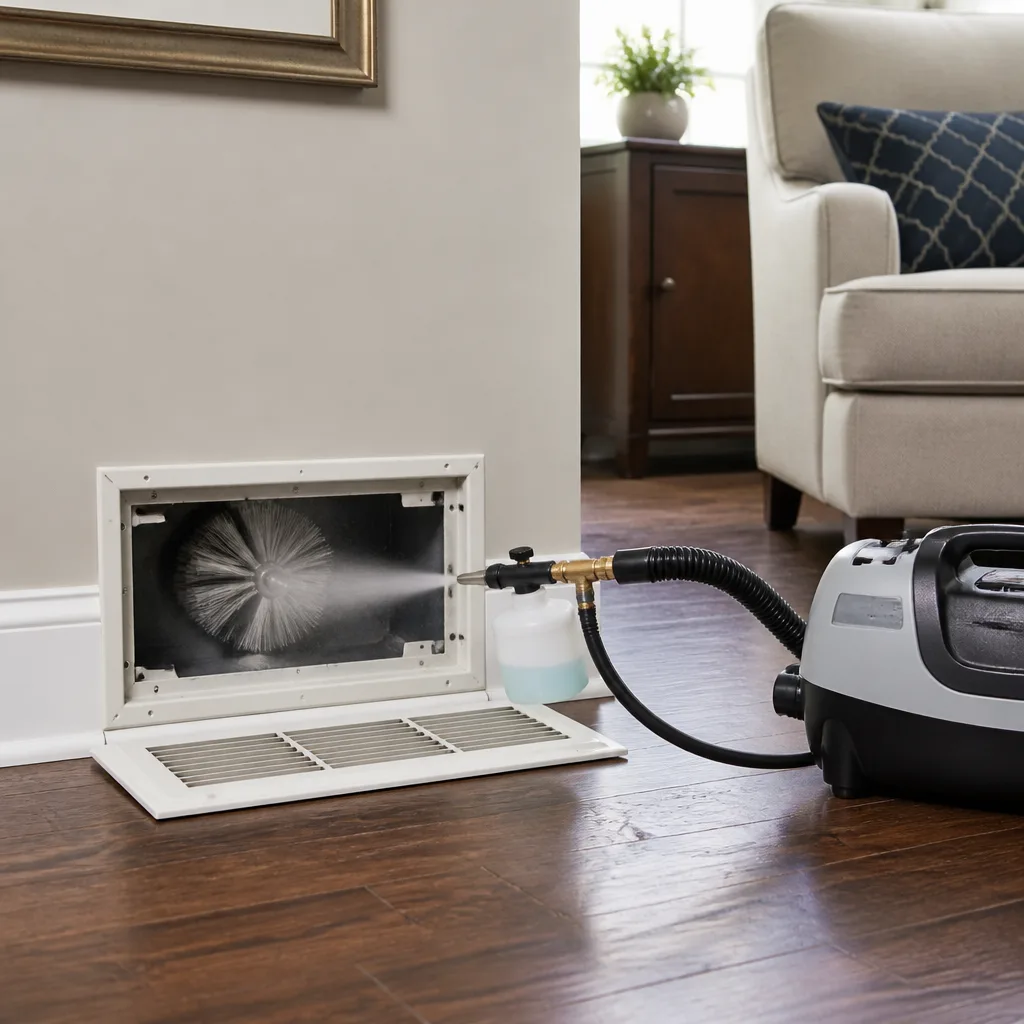 Sanitizing & deodorizing
Whole-system duct and dryer vent check with before-and-after photos - you see exactly what came out of your vents
That "$99 whole-house special" is a bait ad - the real number appears once they are in your hallway, or the "clean" is a shop-vac at the register. We photograph the inside of your ducts before and after instead.
Air Duct Cleaning Maintenance Checklist for West Anaheim Homeowners
Replacing a filter every 90 days while ignoring the return plenum is like changing the oil but never inspecting the engine. The most contaminated part of your system stays contaminated, and the filter you dutifully swapped keeps loading up faster than it should. Most West Anaheim homeowners are handed a generic “clean your ducts every few years” reminder and no way to decide whether that applies to their house. This guide replaces the reminder with a decision framework: three home profiles with different trigger points, checkpoints to log after Santa Ana wind events, and the filter decision that actually matters.
Quick Answer
Your duct maintenance schedule should be set by four variables, not the calendar: the age of your ductwork, your filter type, how many people and pets live in the house, and local air events like Santa Ana winds. A standard-occupancy home in West Anaheim generally needs a professional assessment every two to three years, a post-renovation home needs one right after the work is done, and a pet-occupied home tends to pull that interval in to roughly every 18 months. Between visits, a simple log of filter changes and register buildup tells a technician exactly where your system stands.
Styles & brands we work with
- Whole-home duct cleaning
- Dryer vent cleaning
- Camera inspection
- Sanitizing & deodorizing
Table of Contents
- Which Home Profile Are You?
- Your Tiered Inspection Schedule
- What to Log After a Santa Ana Wind Event
- Reading Your Registers: The Leading Indicator
- The Filter Upgrade Decision Point
- What to Document Between Cleanings
- Why Cleaning, Sealing, and Sanitizing Belong Together
- The Checklist Item Most Homeowners Skip
Which Home Profile Are You?
A maintenance checklist only works if it’s built around your variables. West Anaheim has a housing stock that spans mid-century ranch homes near Beach Boulevard, older bungalows closer to Lincoln Avenue, and newer builds further west toward the 405. That variety matters. A 60-year-old house with original galvanized or early flex duct does not follow the same schedule as a home built ten years ago with sealed, insulated runs. The number of occupants, whether anyone in the home deals with allergies or asthma, and how many pets shed in the house all shift your trigger points.
We group West Anaheim homes into three profiles for practical planning. None of these is a hard rule – they’re starting points you adjust as you learn your system.
- Post-renovation profile: You’ve had drywall work, flooring, kitchen, or bath remodeling done in the last 12 months. Construction dust is fine particulate that settles everywhere, and a home with recent work carries a heavier load than a settled home of the same age.
- Pet-occupied profile: One or more pets in the house, especially dogs that shed. Pet dander and hair load the return air side quickly and clog the grilles faster than most homeowners expect.
- Standard occupancy profile: Two to four people, no recent renovation, no significant shedding pets. This is where the calendar-based reminder most people receive actually fits.
If your home falls into more than one profile, use the tighter trigger point. A post-renovation home with two dogs starts at the post-renovation interval, then settles into the pet-occupied one. That’s the decision tree: use the most demanding profile that applies, and reassess when circumstances change.
Your Tiered Inspection Schedule
Here’s the framework. These intervals describe when a professional assessment is worth scheduling, not necessarily a full cleaning. An assessment tells you whether your ducts need cleaning now or can wait. That distinction saves money and is exactly what a checklist should help you decide.
Profile-Based Intervals
- Post-renovation: Schedule an assessment immediately after the work is finished and the dust has settled – typically within 30 to 60 days. Then return to your normal profile’s interval.
- Pet-occupied: Assess roughly every 18 months. Homes with two or more heavy-shedding dogs often pull that in closer to 12 months based on what the registers show.
- Standard occupancy: Assess every two to three years. Well-sealed ductwork in a newer build can go longer if the registers stay clean.
These aren’t arbitrary. They reflect how fast the return side of a system accumulates load in each scenario. The return plenum – the box where air re-enters the system before the blower – is where most contamination actually sits, and it’s the part a homeowner can’t see. That’s why the professional assessment matters more than any DIY visual check.
What a Proper Assessment Covers
- Visual inspection of accessible duct runs for dust accumulation, debris, pest evidence, and disconnected or crushed sections.
- Return-side inspection including the plenum, since that’s where the heaviest load accumulates.
- Register and grille assessment to correlate what you see at the vent with what a camera finds inside.
- Seal check at joints, boots, and the air handler connection to catch leakage that lets attic or crawlspace air into the system.
- Written findings so the next visit has a baseline to compare against.
If the assessment finds only light dust, you’ll likely be told to wait and re-check at your next interval. That’s a legitimate outcome and one you should expect from a service that isn’t trying to sell a cleaning every visit. For a full walkthrough of what cleaning actually involves, see our page on air duct cleaning.
What to Log After a Santa Ana Wind Event
Santa Ana winds are the single most underrated variable in a Southern California duct maintenance plan. These offshore winds push dry, dusty air from the interior toward the coast, and in West Anaheim they arrive with fine particulate and, when there are fires to our east, ash. That material doesn’t stay outside. It enters through every gap, window, and door seal, and the HVAC system pulls it into the return air side. Over a season of wind events, that loading adds up in a way a standard calendar reminder never accounts for.
You don’t need to inspect your system after every windy day. But logging the events gives you a genuine data point.
- Note the date and duration of any significant Santa Ana event in a simple notebook or phone note. Two or three a season is typical; a bad year runs longer.
- Check your filter 24 to 48 hours after the winds settle. A filter that was clean the week before and is visibly gray afterward tells you something about what the return side carried.
- Look at your return grille – the large grille, usually near the floor or on a hallway wall. Wipe it with a white paper towel and note the color. Gray or black residue after a wind event is expected; heavy accumulation is a signal.
- Watch for ash specifically. If there’s active fire activity to the east, ash is a concern. Avoid running the system on a high setting during heavy ash fall and check the filter once the air clears.
Two or three logged events a year, cross-referenced with register buildup, can push your inspection earlier than the calendar would suggest. That’s the whole idea: your checklist reacts to your home’s actual conditions rather than a fixed schedule written for a generic house. For property managers running several units in West Anaheim, this kind of event log turns an annual guess into a defensible decision.
Reading Your Registers: The Leading Indicator
Your registers and grilles are the only visible part of the duct system, and they function as a leading indicator of what’s happening deeper in. If the return grille is caked with dust and the supply registers show buildup on the blades, the interior of the ductwork is almost certainly loaded too. If the grilles are clean and the filter changes stay predictable, you have early evidence the system is in reasonable shape.
How to Self-Assess in Three Minutes
- Shine a flashlight into each supply register – the vents that blow air into rooms. Look past the louvers to the visible duct interior. Light dust film is normal. Visible matting, debris, or discoloration suggests deeper accumulation.
- Remove and check the return grille where it’s safely accessible. The return side carries the load, so it’s almost always dirtier than the supplies. Whitish or gray film on the grille is expected. Caked, dark, or fuzzy buildup points to a system that needs attention.
- Compare across the house. If one room’s register is markedly dirtier than the others, that branch is worth flagging. Uneven buildup sometimes indicates a duct problem – a leak, a crushed run, or a boot that’s pulling air from a dirty space.
This self-check doesn’t replace a camera inspection, but it gives you a reliable early signal and something concrete to log. Most homeowners who wait until the air smells off or the system struggles have already passed the point where the registers were telling them something. For homes in West Anaheim that sit near major corridors like Beach Boulevard or Lincoln Avenue, where road dust adds to the load, the register check becomes even more useful as a monthly habit.
The Filter Upgrade Decision Point
The filter question is where a lot of well-intentioned homeowners create new problems. The instinct is to buy the highest-MERV filter available, reasoning that more filtration must be better. Not necessarily. A filter that’s denser than your blower can handle restricts airflow, which reduces system efficiency, drives up energy use, and can damage the equipment over time. The right MERV rating depends on your system and your priorities.
MERV – Minimum Efficiency Reporting Value – is a scale for how well a filter captures particles. Higher numbers catch finer particles. The tradeoff is airflow restriction.
- MERV 8 to 10: Standard residential range. Adequate for most homes and easy on airflow. If no one in the house has allergy or asthma concerns, this is often the sensible default.
- MERV 11: A reasonable step up for a home with mild allergy sensitivity or a light pet load. Still generally within what a typical residential blower can handle, but check your system’s rating.
- MERV 13: Meaningful fine-particulate capture, worthwhile in a home with a household member dealing with allergies or asthma, or after a renovation with fine dust. But it’s also where airflow restriction becomes a real risk on an older or undersized system.
The decision point: if you’re considering MERV 13, first confirm your system can handle the static pressure. A licensed HVAC technician should check this. Upgrading a filter without checking can turn a clean system into a struggling one. For homes in West Anaheim with older equipment, this check is worth doing before you commit. If a MERV 13 makes sense, a filtration system built around a proven brand like Honeywell or Aprilaire is a better path than a high-MERV panel filter jammed into a slot that wasn’t designed for it. Manufacturers like these make filters and filtration systems with published ratings you can compare against your equipment.
What to Document Between Cleanings
The single most useful thing a homeowner can do between professional visits is keep records. This isn’t busywork. A documented history lets a technician establish a baseline at the next visit and compare it against something real. Without it, every visit starts from zero, and you’re guessing whether conditions are improving or getting worse. It’s also how a homeowner can tell at a glance whether a service did what it should have.
What to Log
- Filter changes: Date, filter MERV rating, and the brand or model if you can note it. The pattern of how often you change tells a technician how fast the filter is loading.
- Register checks: Date and a one-line description (“return grille light gray” or “supply in back bedroom showing buildup on blades”).
- Santa Ana wind events: Date and duration, plus a filter photo if it’s clearly loaded afterward.
- System changes: Any HVAC repair, replacement, thermostat change, or filter upgrade. A new air handler or restored duct changes the whole picture.
- Smells or symptoms: Musty odor, increased dust in the home, or family members noticing allergy or asthma symptoms more in certain rooms. All of these are clues.
- Photos: Before-and-after photos of registers at each professional cleaning give you a visual record of what was found and what was corrected.
When a technician arrives, you can hand over the log and get a benchmarked inspection instead of a fresh one. Photos of your own ducts before and after cleaning are the most direct way to confirm the work was done and done well – a factor worth insisting on, since the biggest complaint about this industry is pricing that changes once the technician is on site. Our approach is one flat price per system agreed before work starts, with before-and-after photos of your own system, not a stock image on a brochure.
Why Cleaning, Sealing, and Sanitizing Belong Together
Cleaning your ducts is one step. Getting the air pathway right means more. A duct system that’s cleaned but leaky will re-contaminate, because gaps at joints and boots pull in air from attics, crawlspaces, or wall cavities that carry their own dirt. A system that’s cleaned and sealed but not sanitized may still carry residue on interior surfaces. The checklist value of handling all three is that the system stops recontaminating itself afterward.
Professional equipment makes the difference here. A rotary brush system like the Rotobrush agitates accumulated debris off duct walls mechanically – that’s the step a shop-vac approach can’t replicate. Negative-air extraction with Nikro equipment pulls that loosened material out rather than redistributing it through the home. Contaminant-grade filtration and negative air pressure capability, the kind used in remediation work with equipment like Abatement Technologies, keeps particles from escaping into living space during the job. In our experience, the difference between a proper job and a quick one is almost entirely in the equipment and the extraction. For the deeper detail on how HVAC equipment interacts with ductwork, see HVAC cleaning.
Post-clean sanitizing is the final step, not an upsell. Using something like Honeywell or Aprilaire products for filtration and surface treatment, or a protective treatment such as Guardsman, treats the cleaned surface and helps keep the system clean longer. That’s the difference between clean ducts and a system designed to stay clean.
The Checklist Item Most Homeowners Skip
Dryer vents are a fire risk, not a maintenance afterthought. Lint is highly combustible, and a restricted vent also extends drying times and strains the dryer. Most duct cleaning services either skip this entirely or bundle it in without addressing it properly. On your maintenance checklist, it deserves its own line item with its own intervals – and it isn’t covered by a duct cleaning visit unless it’s specifically included.
Dryer Vent Checkpoints
- Check the vent line and exterior termination every few months. If the exterior flap doesn’t open freely or lint is visible at the termination, the vent needs attention.
- Watch drying times. Clothes that suddenly take two cycles to dry is a real signal the vent is restricted. Address it rather than running longer cycles.
- Lint trap cleaning is routine, but a lint trap that isn’t capturing much lint means lint is accumulating elsewhere in the line.
- Professional cleaning is worth scheduling for a dryer vent that’s never been cleaned since installation, or whenever airflow seems restricted. For this service on its own, see dryer vent cleaning.
West Anaheim homes with long vent runs, or vents that route through an interior wall rather than directly outside, are at higher risk for lint accumulation simply because there’s more pipe for lint to settle in. It’s worth a check at the same time as a duct assessment so you’re not scheduling a separate visit.
Common Mistakes to Avoid
- Relying on a fixed calendar instead of a decision framework. A “clean your ducts every two years” reminder ignores the post-renovation load or the pet-occupied load entirely. Use the profile that fits your home, and reassess when your home changes.
- Buying the highest-MERV filter without checking airflow. A MERV 13 on an older blower can restrict airflow enough to strain the system. Confirm the static pressure rating before you upgrade.
- Skipping the return plenum. The return side is where the heaviest contamination sits, and it’s the part most often ignored. A cleaning that only covers the visible registers isn’t addressing the system.
- Not logging anything between visits. Without a record, each technician starts from zero and you can’t tell whether conditions are improving. A simple log turns a guess into a benchmarked inspection.
- Cleaning without sealing. A leaky duct system re-contaminates quickly. Cleaning without address joints and boots leaves the same problem coming back sooner.
- Treating dryer vent cleaning as an optional add-on. It’s a separate service with its own safety implications and its own maintenance interval. Don’t assume a duct cleaning visit covers it.
- Accepting a price that changes once the technician is on site. Insist on one flat price per system, agreed before work starts, and ask for before-and-after photos of your own ducts – not stock images.
See the difference
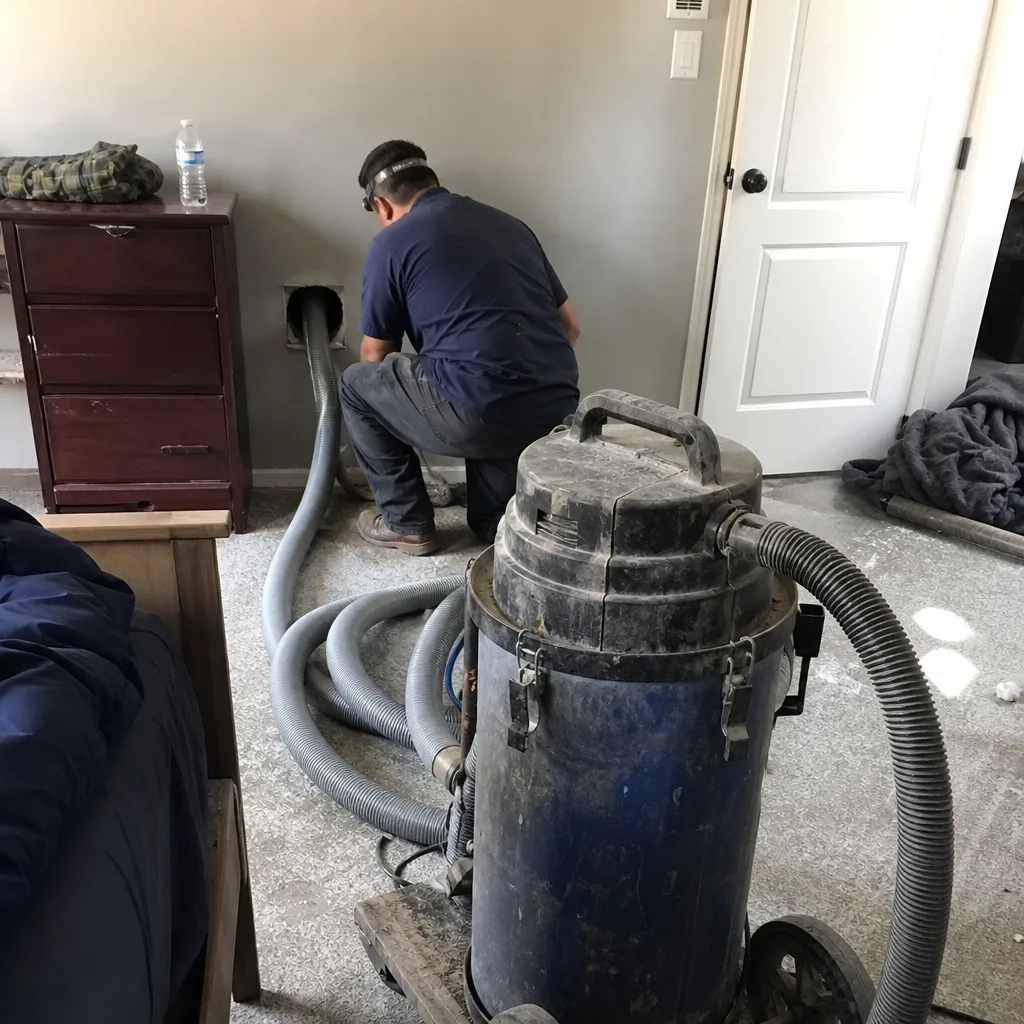 Before
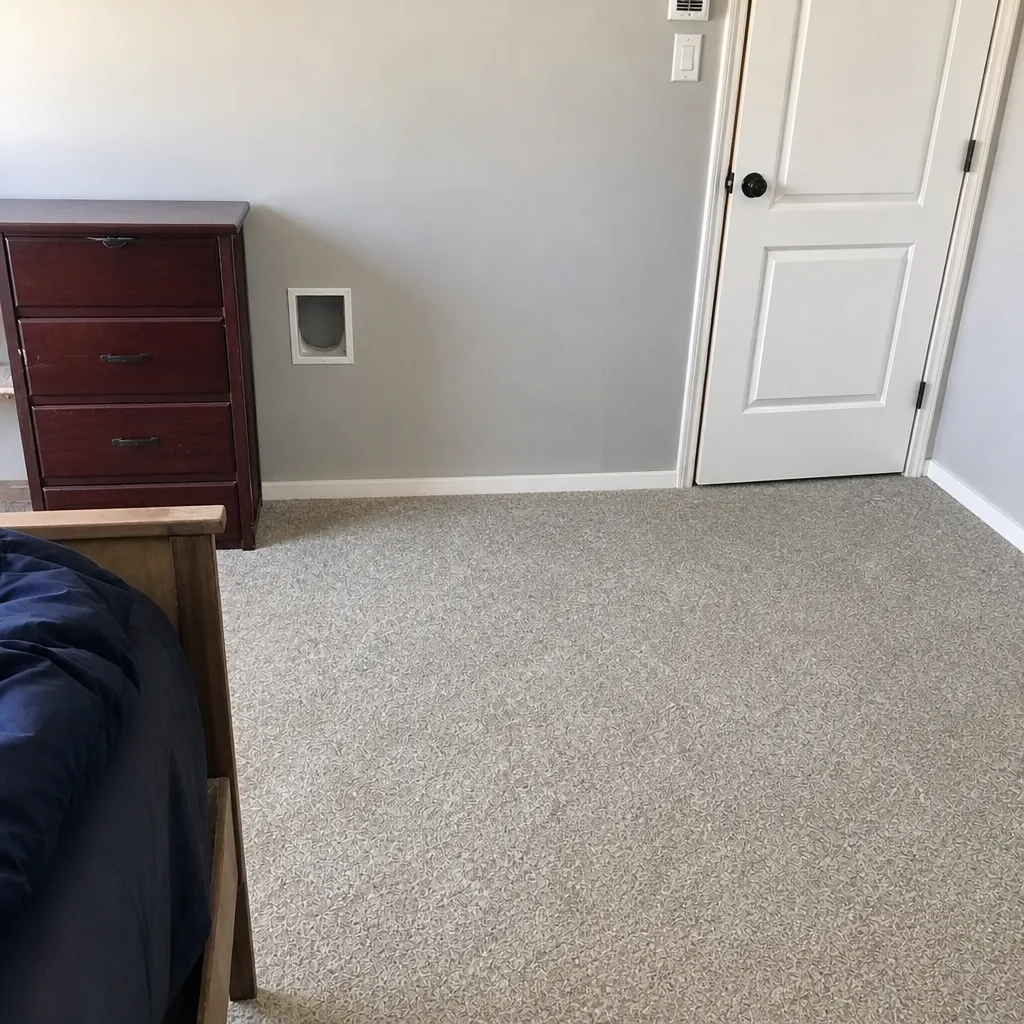 After
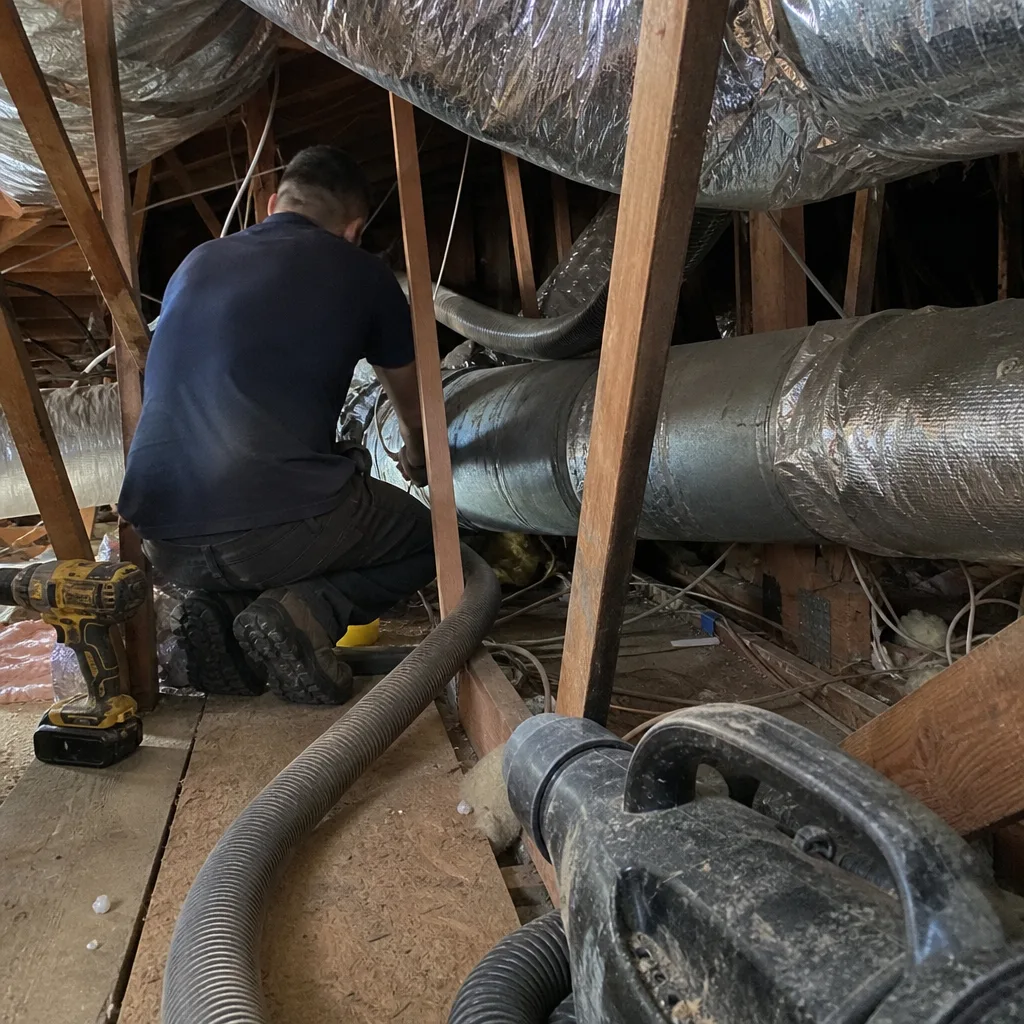 Before
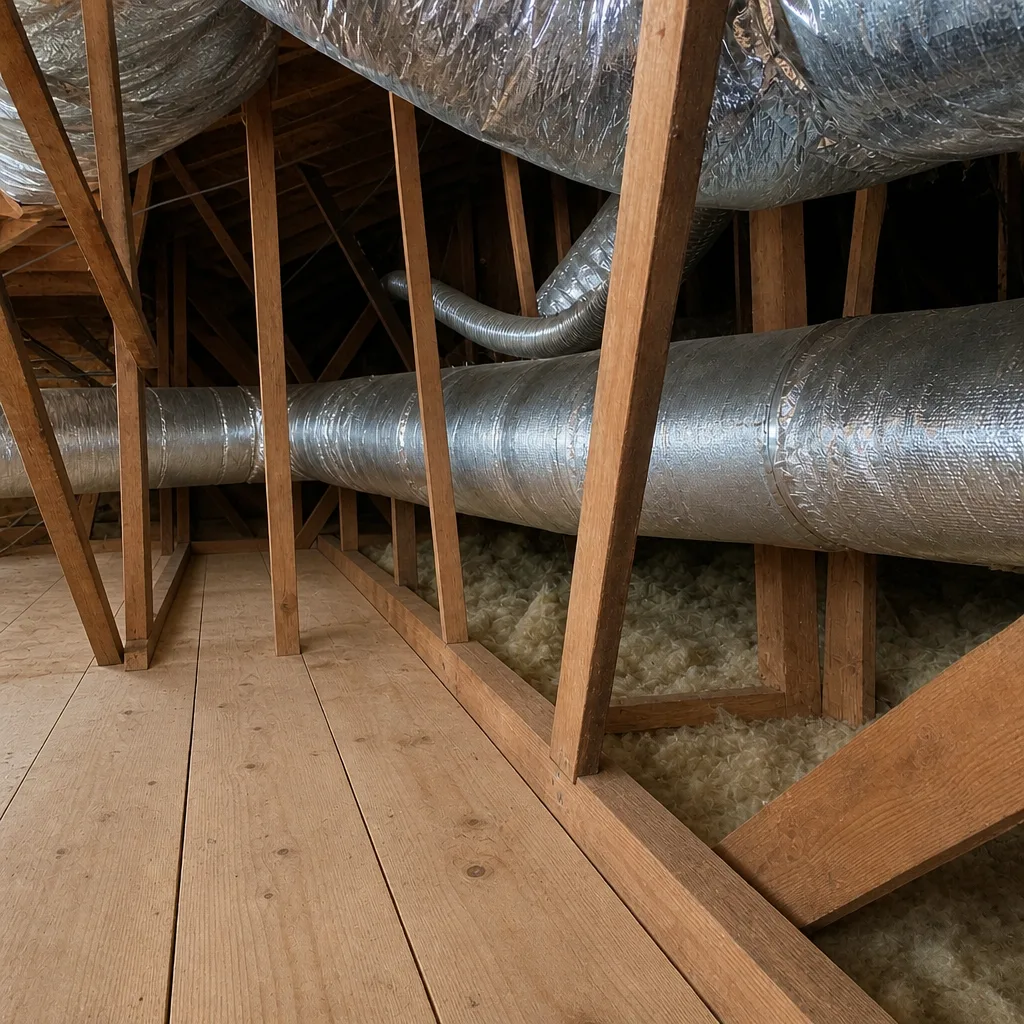 After
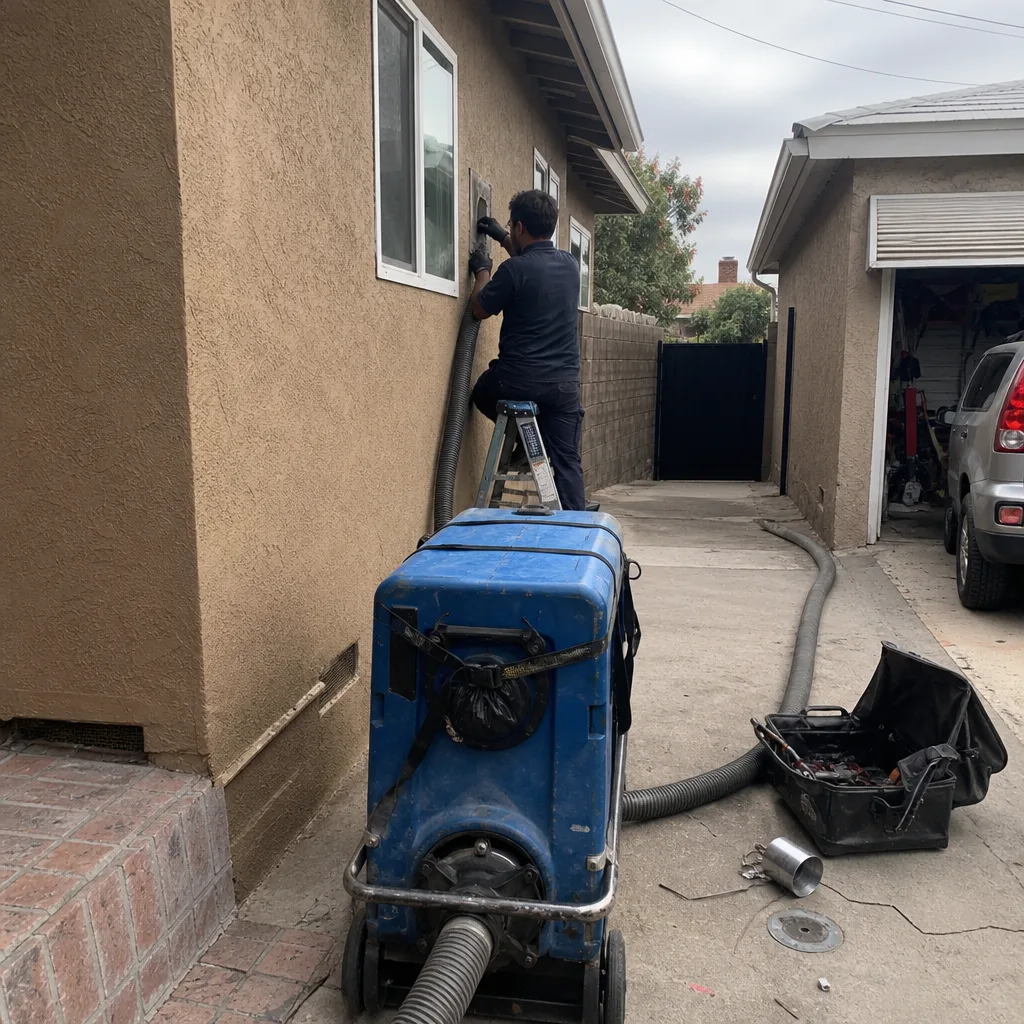 Before
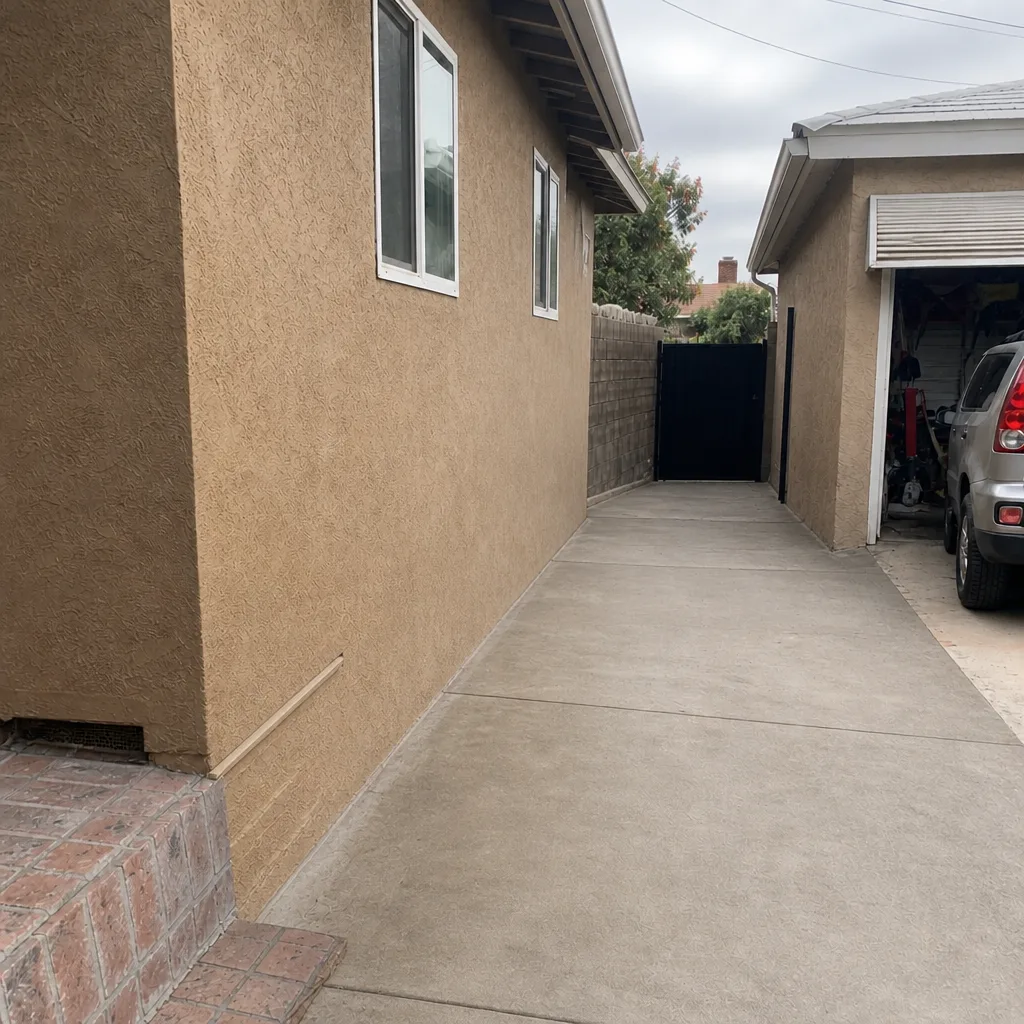 After
When to Call a Professional
Some decisions don’t wait for your next scheduled interval. A musty or stale smell that persists when the system runs is worth investigating. Visible buildup on the return grille that returns quickly after a filter change is another signal. Increased dust settling on surfaces shortly after cleaning, or family members whose allergy or asthma symptoms get noticeably worse in certain rooms, both point toward a system that needs professional assessment. After any renovation that generated fine dust, or after a string of Santa Ana wind events, an inspection is worth scheduling rather than guessing. If you’re uncertain whether you’re at the trigger point for your profile, a professional assessment settles it. Air Duct Cleaning West Anaheim offers free estimates in West Anaheim – call (866) 937-8584.
Frequently Asked Questions
Most standard-occupancy homes need a professional assessment every two to three years, not a cleaning on a fixed schedule. Homes with recent renovations should be assessed 30 to 60 days after the work, and pet-occupied homes usually land closer to every 18 months. Santa Ana wind events can move that timeline earlier. Call (866) 937-8584 for a free estimate – the assessment tells you what your specific system needs.
Cleaning is priced per system, not per vent, and a written estimate sets the final price. The cost varies with the size of the home, the number of systems, and whether duct repair or sealing is needed alongside cleaning. Ask for a flat price agreed before any work starts, and expect before-and-after photos of your own ducts. Call (866) 937-8584 for an exact quote – estimates are free.
Cheap quotes often reflect a per-vent price or a teaser offer that doesn’t cover a whole-system cleaning, which gets discovered on site when the real invoice is presented. The difference is usually in what gets cleaned (return plenum and full duct runs vs. surface registers only) and the equipment used. A rotary brush agitation and negative-air extraction job is a different service than a light vacuum. Ask what’s included before you agree to a price, and call (866) 937-8584 for an honest whole-system estimate.
Before-and-after photos of your own system are the most direct evidence. A technician should photograph the return plenum and duct interiors both before and after cleaning, and those photos should be of your home, not stock images. Ask for them and keep them with your maintenance log. Call (866) 937-8584 for an estimate that includes before-and-after documentation.
MERV 13 makes sense when there’s an allergy or asthma concern in the household or after a renovation, but only if your system can handle the airflow restriction. Older or undersized systems may struggle with the added static pressure. Have a technician check before upgrading. A filtration system built around a brand like Honeywell or Aprilaire handles high filtration without starving the blower. Call (866) 937-8584 to discuss a filter assessment.
Yes, and separately. Dryer vent cleaning is its own service with its own safety implications – lint is combustible, and a restricted vent is a fire risk, not a cosmetic issue. A duct cleaning visit doesn’t cover it unless it’s specifically included. If you’re not sure when your dryer vent was last cleaned, that’s reason enough to schedule it. Call (866) 937-8584 and we’ll schedule both together.
The Bottom Line
A duct maintenance checklist works best as a decision framework, not a calendar. Figure out which home profile fits – post-renovation, pet-occupied, or standard occupancy – and set your inspection interval from there. Log Santa Ana wind events and check your return grille regularly; those two habits catch most real problems early. Be deliberate about filter MERV ratings and confirm airflow before upgrading. Document everything between visits so each assessment is benchmarked against the last. And remember that cleaning, sealing, and sanitizing belong together, with dryer vent cleaning as a separate safety item. For a full-system assessment in West Anaheim, call Air Duct Cleaning West Anaheim at (866) 937-8584. We answer 24/7. Fast dispatch from 7am to 7pm, Sunday through Friday.
Written by the team at Air Duct Cleaning West Anaheim.